.jpg?width=1170&name=FranklyHR_blog_Header%20(1).jpg)
Previous Updates
How can an employee claim harassment when offensive jokes or other conduct are not directed specifically at them?

Employers can be automatically liable for harassment by a supervisor that results in a negative employment action, such as failure to promote or hire, loss of wages, termination, or even constructive discharge (i.e., when working conditions are so intolerable that an employee feels resigning is their only option). Under federal law and most states, when a supervisor's harassment results in a hostile work environment, the employer can avoid liability only if it can prove that:
- It reasonably tried to prevent and promptly correct the harassing behavior; and
- The employee unreasonably failed to take advantage of any preventive or corrective opportunities provided by the employer.
It is imperative that employers take appropriate steps to prevent and correct harassment in their workplaces. Employers should strive to create a culture in which harassment is not tolerated. This starts with leadership demonstrating commitment to such a culture. This can be done by clearly communicating to employees that unwelcome harassing conduct will not be tolerated, establishing an effective complaint or grievance process, providing anti-harassment training to managers and employers, and taking immediate and appropriate action when an employee raises a complaint. Employers should strive to create an environment in which employees feel free to raise concerns and are confident that those concerns will be addressed.
How Can I Handle Workplace Disagreements That Impact the Team?
- Clarify the concern: Identify the specific disagreement and how it is affecting the team.
- Listen to each perspective: Give each person an opportunity to be heard without interruption.
- Find common ground: Reconnect the conversation to shared goals, such as serving customers, meeting deadlines, supporting coworkers, or maintaining a respectful team environment.
- Agree on next steps: Document what will change, who is responsible, and when follow-up will occur.
- Follow up: Check in after the conversation to ensure the agreement is working and the behavior has improved.
Is Your Employee’s OnlyFans Cause for Alarm?
Stacy worked in the accounting department at ABC Processing Plant. Unbeknownst to her employer, she also had an OnlyFans account with content that was NSFW. Stacy had been working both jobs for over a year and never shared this information with her coworkers at the plant. Her OnlyFans work never interfered with her job at the plant, as evidenced by the fact that no one even knew Stacy had a side job.
On Monday morning, Stacy went to the Operations Manager, Monica, and informed her of what had happened. She emphasized she wasn’t ashamed of her other job, nor was she bothered by the fact that James had viewed her photos or sent her money. She simply wanted Monica to ask him not to “share” his discovery with the other employees because she didn’t want them gossiping about it. Monica thanked her for bringing the matter to her attention and promised she would speak with James.
After speaking with Stacy, Monica was shocked that James, a member of senior management, had subscribed to a subordinate’s OnlyFans, viewed her photos, sent her money, and messaged her about the photos – even if he was off-duty and it was a part of her second job. Monica felt she should do more than just “talk to James,” but she wasn’t sure how to respond, so she called an HR Professional for guidance on how to handle the situation.
The HR Professional agreed James had exercised poor judgment when he subscribed to a subordinate’s OnlyFans and sent her money with a message after viewing her photos. However, implementing corrective action against him would be inappropriate under the circumstances. He had not done anything different from other users on OnlyFans and didn’t say or do anything to make Stacy feel uncomfortable. Instead, the HR Professional advised Monica to remind James of his responsibilities as a manager to uphold company policies. The HR Professional also recommended that Monica specifically remind James about the company’s anti-discrimination and harassment policy and further remind him that he cannot use his newly discovered information about Stacy to create a hostile work environment for her with other employees.
Can I Tell A Pregnant Employee When To Think About A Leave of Absence?
Her manager, Pete, recently noticed Daisy was having difficulty reaching some items in the prep area. Rather than ask for assistance, she started using a step stool to access the hard-to-reach items.
Pete became concerned after seeing Daisy balancing herself on the stool while reaching for a pizza pan. He was afraid she would lose her balance and fall—potentially harming herself and her unborn child. When Daisy got down from the stool, Pete asked, “Don’t you think your belly is getting too big to continue working? You should start thinking about taking a leave of absence.”
During the conversation, he mentioned the statement he made to Daisy. The HR Expert told him that, despite his concern for Daisy’s well-being, if she is not requesting a leave of absence, he cannot require her to go out on pregnancy leave before she is ready.
After speaking with the HR Expert, Pete called Daisy into his office and apologized for making his earlier statement. He reassured her that he was happy with her performance and willing to make reasonable accommodations so she could continue working during her pregnancy.
The Takeaway
In this situation, the manager’s comment was technically unlawful and discriminatory under state and federal laws. When a mistake like this occurs, it is important to take immediate steps to rectify the situation with the employee. If you make a mistake of this nature, be sure the employee understands that the company will not discriminate against or treat pregnant employees any differently just because of their pregnancy.
Reach out to your FrankAdvice HR Consultant when you first learn an employee is pregnant, so you are prepared to properly handle situations as they arise, stay in compliance with the law, and mitigate your risk of a pregnancy discrimination lawsuit.
How can we help an employee back from medical leave stay safe at work while taking medication?
If it does, you may consider asking him to speak with his doctor about taking the medication at a different time or using an alternative that would not pose a safety risk while working. If you cannot accommodate the medication in the kitchen area, you can discuss other reasonable accommodations, such as alternate assignments and a leave of absence.
These conversations should be documented as part of your interactive process to comply with the Americans with Disabilities Act (ADA).
Reach out to your FrankCrum contacts as needed.
What Should I Do If a Third Party Claims My Employee Was Sexually Assaulted at Work?
Stacy worked the afternoon shift at Tasty Shakes, a busy quick-service restaurant with a mostly young staff. By all accounts, she got along well with her coworkers, including Adam, a line cook she often worked alongside. One Monday morning, the store manager (Darlene) received an angry phone call—not from Stacy, but from her boyfriend, Steve. He alleged Adam had sexually harassed and assaulted Stacy at work, claimed Adam forced Stacy to kiss him, grabbed her breasts, and made her touch his private area. Steve demanded that Adam be fired immediately and threatened to “go public” if he wasn’t fired.
When Adam was interviewed, he did not deny the physical contact. In fact, he acknowledged that they had kissed and touched on several occasions when the restaurant was slow. However, he firmly stated it was mutual and consensual.
Darlene then reviewed the restaurant's camera footage. She saw Adam and Stacy kissing and embracing each other on several occasions throughout their shift. There were times when Stacy pulled Adam away from the view of other coworkers and put her arms around his neck. Another instance showed Adam lifting Stacy up and kissing her. There was not one of the myriad displays of affection where it looked like Adam forced himself on Stacy, or that Stacy was upset or uncomfortable with what they were doing. Darlene thought, “What is going on here?”
The next day, Adam asked to talk with Darlene, then provided something unexpected: the text messages Stacy had sent over the weekend. In the messages, she warned him that Steve planned to report him to management for forcing himself on her and wrote she was “sorry” and he would “probably lose [his] job.” The tone suggested regret about the complaint, not fear or distress about an assault. The texts did not align with the narrative Steve or Stacy claimed.
Adam then provided other messages with Stacy where he asked her why this was happening and reminded her that he had asked her several times if it was okay if they were doing this because she had a boyfriend. She said she was feeling guilty, so she “came clean” to her boyfriend and again apologized; he was probably going to lose his job.
Darlene then interviewed Stacy again. When confronted with the text messages and camera footage, Stacy admitted the physical contact was consensual, and when she told her boyfriend she kissed a coworker, the story got out of hand and led to her boyfriend making the complaint that Adam forced himself on her.
Darlene concluded the serious assault allegations were not substantiated. In the end, both employees were terminated for violating the company’s policy on inappropriate relationships in the workplace.
This situation underscores several critical lessons for employers:
- Complaints may come from third parties who do not have firsthand knowledge of what occurred. Whether the complainant is an employee or not, allegations of misconduct must be investigated.
- Even highly emotional or threatening demands for immediate action cannot replace a fair investigation.
- The accused employee must always be given an opportunity to respond.
Are Salary Ranges Required In General Hiring Flyers (Not A Job Posting)?
How Should I Handle A Non-Employee Who Breaks Workplace Policies?
Dirt Delivery, Inc. has been in the gardening business for 10 years. It’s a family-owned and operated business with a clear policy about workplace conduct. All 100+ employees receive a handbook clearly stating the following:
Workplace Conduct
"Dirt Delivery Inc. believes in creating a working environment conducive to achieving our work-related goals. Dirt Delivery also believes in creating a working environment where all employees feel welcome, and no one is subjected to harassment or discrimination. For this reason, Dirt Delivery strictly prohibits the use of any vulgar language, language intended to isolate any individual employee, and proselytizing at work."
The Mystery Dirt Delivery has a small break room that doubles as a conference room, with a chalkboard and table for meetings. On any given day, 20–30 employees use the break room, but lately they have started complaining that the chalkboard is covered with Bible verses. Rachel, the company’s operations manager, removed the verses immediately and placed a copy of the company’s workplace conduct policy directly on the chalkboard.
The Verses Keep Appearing Despite her actions, the Bible verses kept reappearing, and the company’s policy kept ending up on the ground. More employees complained, and everyone Rachel questioned denied writing on the board. Rachel worked late one evening that week and swung by the break room for a drink.
The Surprising Scribe As Rachel walked up, she saw the night janitor enter the break room, grab a piece of chalk, and begin writing verses on the board. Rachel was furious. The janitor didn’t even work for Dirt Delivery. He worked for the cleaning service Dirt Delivery hired.
A Request Rebuffed Rachel called the cleaning company and calmly explained the situation and the company’s policy. She mentioned the complaints she’d received and asked the president of the cleaning company to tell his employee to stop writing on the chalkboard. Much to her disbelief, the president of their company told her that he refused to tell the janitor to stop.
A Call for Help Rachel reached out for professional advice. She had an obligation to enforce Dirt Delivery’s policy and to protect her employees. If the culprit had been one of her employees, she would have known what to do. But the janitor wasn’t her employee. Could she talk with him directly and ask him to stop? Could Dirt Delivery be held liable for harassment if the culprit wasn’t even a company employee?
Advice Dirt Delivery is obligated to address the employees’ complaints and provide a harassment-free workplace. The cleaning company must tell its employee to stop writing on the chalkboard, and if it won’t, Dirt Delivery should hire another cleaning company. Dirt Delivery must protect its employees from third parties, including contractors, vendors, and clients. If it fails in its obligations, it’s at risk of facing claims such as hostile work environment and failure to prevent harassment. Reach out to your FrankAdvice HR Consultant for professional guidance with tricky employee issues and assistance with HR policies.
Oh, No! What Should I Do Now That I Hired a Registered Sex Offender?
Mike has worked for the ABC Accounting Firm for two months doing maintenance at night. Since day one, he’s done an outstanding job and has performed all his duties without issue.
As unsettling as this new information was, Julie felt she didn’t have grounds to terminate Mike. But she also believed she needed guidance from an HR professional before bringing the subject to the partners’ attention.
The HR professional confirmed that Julie’s instincts were correct. Having a criminal conviction is not a protected class under Title VII of the Civil Rights Act of 1964; however, a blanket policy of discharging or refusing to hire anyone with a criminal conviction is a discriminatory practice because such policies often disproportionately exclude members of certain racial or ethnic groups. (See EEOC Enforcement Guidance on the Consideration of Arrest and Conviction Records.)
If an employer wants to take an adverse employment action (e.g., terminating or refusing to hire) based on a person’s criminal history, the employer must engage in a balancing test to determine if the action is “job related” and “consistent with business necessity.” There are three factors that an employer must consider:
- The nature and gravity of the offense or conduct. The EEOC states that the nature of the offense or conduct may be assessed by looking at the harm caused by the crime (for example, theft causes property loss). The legal elements of a crime also may be instructive. A conviction for felony theft may involve deception, threat, or intimidation. And with respect to the gravity of the crime, a misdemeanor is generally less severe than a felony.
- The time that has passed since the offense, conduct, and/or completion of the sentence. In considering the time that has passed, there is no bright-line rule that the EEOC gives. However, the more time that has passed since a conviction, the less relevant it probably is versus a conviction in the recent past.
- The nature of the job held or sought. In considering the nature of the job sought, an
employer cannot rely just on a job title. The employer must look at the essential duties of the job (e.g., data entry, lifting boxes), the circumstances under which the job is performed (e.g., the level of supervision, oversight, and interaction with co-workers or vulnerable individuals), and the environment in which the job's duties are performed (e.g., outdoors, in a warehouse, in a private home).
On occasion, these factors may support denying an applicant employment without further evaluation. However, often, this is not the case and employers should err on the side of caution and conduct an “individualized assessment.”
An individual assessment means the employer talks with the employee and provides them an opportunity to explain the circumstances of the conviction and why it should not preclude them from employment. There are several factors the employer should consider when doing an individualized assessment:
- The facts or circumstances surrounding the offense or conduct.
- The number of offenses for which the individual was convicted.
- Age when convicted, or released from prison.
- Evidence that the individual performed the same type of work, post-conviction, with the same or a different employer, with no known incidents of criminal conduct.
- The length and consistency of employment history before and after the offense or conduct.
- Rehabilitation efforts (i.e., education/training).
- Employment or character references and any other information regarding fitness for the particular position.
- Whether the individual is bonded under a federal, state, or local bonding program.
Getting back to ABC Accounting Firm and Mike’s situation – since Mike’s criminal background was not impacting his ability to perform his job and not putting employees or customers at risk, he shouldn’t be terminated. A key factor in the decision was his status as an after-hours employee who also worked in isolation – he was never with any other person. Terminating him solely for being a registered sex offender could lead to a wrongful termination claim.
Julie met with the partners and explained why they should not terminate Mike. While the situation still made the partners uneasy, they understood and accepted Julie’s recommendation.
If you have an applicant or employee with a criminal history, you can reach out to consult on the situation with your FrankAdvice HR Consultant.
What Are Some Change Management Best Practices for Employers?
- Assess the Current State: Identify who will be impacted by the change and how they will be affected. This includes evaluating the organizational culture and the level of change readiness to proactively identify potential resistance points.
- Define and Communicate the Future Vision: Establish clear, measurable objectives (strategic goals and KPIs) and a compelling vision for the future state. This vision must be effectively and transparently communicated to create a sense of urgency and answer the critical employee question: "What's in it for me?"
- Develop a Strategy: Determine the approach, secure executive sponsorship, and select the appropriate change management team.
- Communicate and Engage: Implement a detailed communication plan that goes beyond announcements to include two-way dialogue. Involve stakeholders and create a network of Change Champions to help drive adoption at the team level.
- Empower and Equip: Provide the necessary training and resources to build the new skills and knowledge required. Managers must be coached to act as effective change leaders, capable of supporting their teams and addressing concerns.
- Remove Barriers: Actively identify, manage, and mitigate resistance to change. Clear the organizational and systemic roadblocks—be they procedural, technological, or cultural—that slow down progress.
- Reinforce and Monitor: Establish metrics (KPIs) to continuously monitor buy-in and progress, not just project completion. Gather feedback to identify and address knowledge or skill gaps that emerge after go-live.
- Celebrate Successes: Recognize and reward individuals and teams for demonstrating the new behaviors and achieving short-term wins. This reinforces the positive outcomes of the change.
- Transfer Ownership: Ensure the change is institutionalized by updating policies, procedures, job descriptions, and compensation/reward systems. The ownership of the new process or system must be officially transferred to the operational teams to aid with long-term sustainment.
Can Employers Require Employees To Speak Only English During Work Hours?
However, an English-only rule applied only at certain times may be permissible if the employer can demonstrate the rule is justified by business necessity. Business necessity means there is an overriding legitimate business purpose, such as ensuring safety or promoting efficiency. Employers must also notify employees of the circumstances under which the rule applies and the consequences of violating it. Failure to provide such notice may result in the rule being considered evidence of national origin discrimination.
Employers considering such policies must carefully evaluate whether less discriminatory alternatives could achieve the same business objectives.
What Are Some Key Performance Indicators Relating To Flexible Work?
- Cost efficiency;
- Engagement;
- Performance;
- Recruitment success; and
- Collaboration technology;
- Cost per hire;
- Cybersecurity;
- Home office costs;
- Office space overhead;
- State law compliance efforts;
- Taxes; and
- Total rewards.
- Employee engagement survey results;
- Employee performance metrics;
- Employee net promoter scores (NPS);
- Employer reviews (e.g., Glassdoor); and
- Retention and turnover metrics.
- Customer feedback;
- Employee efficiency;
- Goals and objectives achieved (e.g., sales goals);
- Peer and manager evaluations;
- Performance review outcomes; and
- Quality of work.
- Applicant pool quality;
- Average time to fill vacancies;
- Candidate call-back rate;
- Cost per hire;
- Successful hire rate; and
- Total applications.
- Average length of service;
- Attrition rate;
- Cost per hire; and
- Failure rate of new hires.
- Employee surveys;
- Performance management;
- People analytics;
- Comparative data (i.e., benchmarking); and
- Employee monitoring data.
How Can I Establish Unpaid Meal Breaks?
What is Disability Pride?
- Red: physical disabilities.
- Gold: neurodiversity.
- White: invisible disabilities and undiagnosed conditions.
- Blue: emotional and psychiatric disabilities.
- Green: sensory disabilities, including deafness, blindness, and other sensory disabilities.
- Faded Black Background: mourning and rage for victims of ableist violence and abuse.

What Can I Do If A Thieving Employee Claims Disability Discrimination?
Phil reviewed surveillance footage of the day in question. He didn’t see anyone pocket money from the drawer; however, he did see Mark taking a few scratcher lotto tickets without ringing them up and playing them right there on the counter. This prompted Phil to look at footage from more of Mark’s shifts. He was seen doing the same thing! Mark also helped himself to some energy drinks and chips while he was at it. Although Phil couldn’t determine why the drawer was $80 short, it was established that Mark never paid for any of the items he took. Phil showed Carla the footage of Mark stealing scratchers, drinks, and food.
Carla messaged Mark so they could discuss the investigation and close it out. Mark messaged back asking if Phil conducted the investigation because he feels Phil is discriminating against him because of his knee injury.
Carla is taken aback. Knee injury? Discrimination?? Mark has never mentioned an issue with his knee or needing an accommodation, never told her he felt discriminated or retaliated against. Carla doesn’t know how to respond to Mark’s message, so she reached out for HR guidance.
Carla confirms that yes, Phil conducted the investigation into the drawer shortage; however, Carla looked at the surveillance footage too, and Mark is clearly on camera taking scratchers, drinks, and food without paying for them. Carla confirms they have a zero-tolerance policy for theft and that is communicated to employees and consistently enforced. Carla also confirms Mark, hired just two months ago, has never mentioned to her, Phil, or any other manager/supervisor, that he has a knee injury. He has never hinted at needing an accommodation either. For all intents and purposes, it appears this is a case of an employee knowing they are going to get terminated so they claim discrimination in the hopes of not being fired.
In this situation, because 24-7 Stop & Go has clear video footage of Mark stealing, they can still terminate him for theft despite the red flag of a recent discrimination complaint. However, employers are required to investigate all allegations of discrimination, even if they believe the allegations have no merit and are not made in good faith (the same goes for harassment and retaliation too!). Carla was advised to talk with Mark to get a statement about the alleged discrimination.
What Should I Consider If I Think My Employee Has A Disability?
And while the Americans with Disabilities Act applies to employers with 15 or more employees, many state laws have the same protections (or greater!) and apply to all employers.
If you think you may have an employee with a disability, ask yourself these questions:
Disability is broadly defined and easily established. It includes individuals with physical or mental impairments that substantially limit one or more major life activities. If an employee is claiming to have a disability, either accept the employee’s claim or have the disability certified by a doctor.
Employers must provide a reasonable accommodation to enable the disabled employee. A reasonable accommodation is any change in the work environment or in the way things are customarily done that enable an individual with a disability to enjoy equal employment opportunities and/or to perform the essential functions of the job.
Employers must engage in the interactive process with the employee. The purpose of this conversation is to gather disability-related information and explore possible accommodations. The entire process is ongoing even after an accommodation has been selected and should be documented throughout the process.
Am I required to consider a leave of absence an accommodation?
How Can I Improve Getting Voluntary Terminations Right?
Q: When an employee provides formal notice of resignation, can we separate them early
- If you offer the employee the option to leave early and they voluntarily accept, then the separation from employment is considered voluntary. State final pay laws will determine whether you are required to pay the employee for the full notice period.
- If you require the employee to leave earlier than the end of their full notice period, then, also depending on state law, you may be converting a voluntary resignation into an involuntary termination. In that case, the employee can be eligible for unemployment benefits, which may raise the employer’s unemployment insurance tax rate for the next year.
- Time and day of the week when their workweek begins;
- Hours worked each day;
- Total hours worked in each workweek;
- Total wages paid each pay period; and
- Date of payment and the pay period covered.
- California;
- Colorado;
- Maine;
- Nebraska;
- North Dakota; and
- Rhode Island.
What Are Some Benefits of Offering Internships?
Everyone is Depressed Sometimes … Why Should I Have to Provide Reasonable Accommodation for Depression?
This is all too familiar to employers. It may surprise you that an employee suffering from depression may be considered disabled and entitled to reasonable accommodation under the Americans with Disabilities Act (“ADA”).
Nancy indicated she has a medical condition limiting her ability to work. Thus, Nancy has given Jennifer enough information to put the Resort on notice she has a disability AND may be entitled to reasonable accommodation (in this case, a short leave of absence).
At this point, the Resort is required to engage in the interactive process with Nancy to determine a reasonable accommodation. This is accomplished by doing the following:
If Nancy cannot return to work, Jennifer may request additional certification from Nancy’s health care provider and continue the interactive process by discussing an accommodation of additional leave.
If Nancy is able to return to work, Jennifer can remind Nancy of the required return to work certification and, if appropriate, Jennifer should continue the interactive process by discussing possible accommodations Nancy may need when she returns to work.
If Nancy is able to return to work without restrictions, then she must be returned to the same or equivalent position. An equivalent position is one that is virtually identical to Nancy’s former position in terms of pay, benefits, and working conditions, including privileges, perquisites, and status. It must involve the same or substantially similar duties and responsibilities, which must entail substantially equivalent skill, effort, responsibility, and authority. In order to avoid possible claims of discrimination when an employee returns to work from medical leave, it is best they be reinstated to their same position.
Conclusion
Remember, employees do not have to specifically request a “reasonable accommodation.” An employee need only mention a potential disabling limitation to trigger an employer’s duty to engage in the interactive process with the employee to determine if they have a disability that requires accommodation.
Employers must also be aware many states have enacted their own laws providing additional protections to employees with disabilities. While this example focuses on the federal ADA, equivalent state law can apply to smaller employers.
Are Office Pools for the Super Bowl or Final Four Permitted?
Subjecting an employee who has engaged in a “protected activity” to an adverse employment action can be an unlawful employment practice. The meaning of “protected activity” is broadly construed and includes, for example, complaining of unlawful employment practices (e.g., harassment, discrimination, unsafe working conditions), requesting and/or receiving a protected leave of absence (e.g., paid sick leave, FMLA, pregnancy leave, Workers’ Compensation), discussing working conditions (e.g., wages, safety issues) and much more. Likewise, “adverse action” is also defined broadly. Adverse action includes any change to the employee’s conditions of employment (e.g., a different schedule, position, responsibilities, etc.), corrective action, and termination.
Taking an adverse action after an employee engaged in a “protected activity” places your organization at risk for getting sued for unlawful retaliation. To reduce the risk for your organization, you can refrain from taking adverse employment actions against this protected group of employees or, at a minimum, consult with an HR professional or employment attorney before taking any employment action against the employee.
Organizations often neglect to document performance problems and prior corrective action. Supervisors may talk with employees about performance issues but then the supervisor never documents the conversation. Being able to show the employee was counseled about their issues and there was ample opportunity to improve is critical when it comes time to terminate the employee for poor performance.
Your organization should have a well-documented reason for terminating an employee. Even in “at-will” states, it is always better to have a reason for terminating an employee. Providing the employee with a reason for the termination makes it easier for the employee to understand why they were terminated and hopefully prevents the employee from developing their own “reason,” i.e., they were fired because they are a woman, took baby bonding leave, have a mental health disability, etc.
A well-documented reason is also essential if your organization is sued for wrongful termination. It is not enough to simply state the employee has been routinely counseled about their performance issue – you will need proof. The proof is in the documentation. Your organization needs to stress the importance of documenting discussions involving employee performance. Talk to the employee and document the date and subject of the meeting. Making a simple note of the conversation puts your organization in a far better position than having nothing to support the assertion that this employee had ongoing problems. Remember, it will ultimately be the organization’s burden to show the employee was terminated for a non-discriminatory reason.
Employers often believe it’s an employee’s obligation to ask for a workplace accommodation. It’s not; it’s the employer’s. The employee doesn’t have to use any magic words or specifically ask for an “accommodation.” An employee simply saying they’re having a hard time getting to work because of their physical therapy appointment is enough information to trigger the employer’s obligation to engage in the interactive process for a possible schedule accommodation.
The interactive process is where the employer meets with the employee or applicant to discuss possible reasonable accommodations. The employer should be open to the employee’s or applicant’s suggestions. During the conversation (or several conversations), the employer and employee exchange information about the employee’s limitations and work restrictions; identify appropriate accommodation(s) that will enable the employee to perform the essential functions of the position; and reach a mutually satisfactory accommodation to be provided.
Much of the time the employer may request medical certification to support the need for an accommodation. However, the employer should never ask the employee what their medical diagnosis is. Employers are prohibited from asking this, and it is never relevant. What is relevant is the employee’s limitations and work restrictions, which are separate from a diagnosis.
Be sure to document all efforts to engage in the interactive process with the employee. This includes all conversations the employer has with the employee when trying to determine a reasonable accommodation; all attempts the employer has made to engage in the interactive process with the employee where the employee has been uncooperative and/or non-responsive; and all accommodations offered and/or provided to the employee.
Federal law and most state laws require employees receive overtime pay for hours worked in excess of the statutory minimum. Two common mistakes occur in regards to overtime pay: (1) employers fail to accurately track employees’ hours worked; and (2) employers misclassify employees as exempt from overtime pay. Failing to correctly pay overtime will result in significant penalties and fines for the employer.
It is the employer’s burden to track employee hours worked and to document those hours. Make sure you have clear policies on getting supervisor pre-approval for overtime hours and documenting hours worked. Likewise, make sure your organization has a clear and accurate understanding of the law governing overtime in your particular state. Some states, such as California, have very strict rules for calculating overtime pay. Conduct an audit of your employees and make sure they are properly classified as exempt or non-exempt (simply calling someone a manager and giving them a salary doesn’t mean they’re exempt from overtime!). If you find you have misclassified an employee, contact an employment lawyer or HR consultant for advice on how to correct the error.
How Can an Employer Get an Employee to Stop Wasting Time and Get to Work?
How Do I Interview a Deaf Applicant?
How Can I Handle An Employee Who Is Habitually Late?
- Warn employees of the employer's expectations regarding showing up to work on time;
- Explain that tardiness is defined as any time that the employee is not ready to work when the shift begins, even if the employee is on the premises;
- Define tardiness as beginning work 15 minutes or more after a scheduled start time;
- Outline the corrective action measures that will be imposed for those employees who do not follow the policy; and
- Establish an individual or department responsible for monitoring and implementing this policy so employees know who to turn to with compliance issues or questions.
- Every time the employee arrives late, this should be recorded with the date, the time, and the reasons given for the tardiness.
- If a supervisor or the employer speaks to the employee, the conversation should also be recorded, as well as any observations of the employer or supervisor.
- If any corrective action measures are imposed, those should be recorded and, when appropriate, the employee's reaction to those measures.
- Any performance reviews in which an employee's tardiness is discussed should be documented accordingly.
- If the employee is late because of a medical condition, employers have a duty to provide the employee with a reasonable accommodation. The employee should provide the employer with necessary medical documentation that outlines the accommodations needed to accommodate the employee's condition. Once these are determined, it will be easier to work with the employee and create a plan on a going forward basis that will address the employee's tardiness as well as accommodate the employee's particular needs.
- If an employee is regularly late because of a childcare issue, the supervisor should meet with the employee and try to come up with viable options.
- Example: The employer or supervisor might allow the employee to come into work late in the mornings and stay later at night.
- If the employee has a sick relative at home, or another personal reason that makes it difficult for the employee to arrive to work on time, the employer can brainstorm with the employee to determine available alternatives.
- Example: The supervisor or employer may consider allowing the employee to temporarily work from home a few days every week.
What Are Captive Audience Meetings?
Employers in Illinois soon will be prohibited from requiring employees to attend or participate in such meetings under the newly passed Worker Freedom of Speech Act.
The Illinois law, effective January 1, 2025, prohibits employers from discharging or otherwise penalizing or taking an adverse employment action against an employee - or threatening to do so - for declining to attend or participate in a meeting or listen to communication from the employer conveying its opinion on political matters. Political matters include matters related to the decision to join or support a labor organization. The law mandates that any employee attendance be strictly voluntary.
Illinois is the latest in the trend of states passing laws prohibiting captive audience meetings. In the past 12 months, similar laws have been enacted by Connecticut, Hawaii, Maine, Minnesota, Vermont and Washington. The legislation has followed calls by National Labor Relations Board General Counsel Jennifer Abruzzo to ban the practice as a violation of employees' free speech rights.
How Can I Fight the Spread of Employee Disengagement?
The problem of employee disengagement is increasing in prevalence. Recent data from Gallup found that engagement among US employees has reached an all-time low in 2024, with a ratio of 1.8 engaged workers per every actively disengaged worker.
Disengagement to this degree can drain an organization's productivity and wreak havoc across a range of business outcomes. In fact, the cumulative effects of employee disengagement are estimated to cost up to 9% of the global GDP in lost productivity each year.
At these levels, it is unlikely that any organization is entirely spared from the effects of employee disengagement. However, disengagement can be hard to detect, and even harder to address.
According to a report from McKinsey, disengaged employees most often fall into the "mildly disengaged" category. These employees are not actively disruptive, but their dissatisfaction causes them to underperform or avoid making contributions that go beyond what is required in their job description. Often, this type of disengagement can go unrecognized.
Causes of Disengagement
Because disengagement can fly under the radar, employers should put measures in place to prevent disengagement from developing in the first place. There are various factors that have been connected to employee disengagement.
Although some causes of disengagement are not directly in an employer's control, organizations can still benefit by providing resources that support employees through the stressors they are likely to encounter, such as bereavement or illness.
Employers should recognize that disengagement is not always due to the personal issues of employees. Disengagement is often caused by inefficient processes within the organization itself. On the bright side, this means that employers can control employee disengagement by recognizing its causes and working to prevent them.
How to Increase Engagement
Collecting employee feedback helps employers identify the extent of disengagement and its root causes for targeted intervention. Employers should review each of the areas listed above to make sure that their organization is well-equipped to stave off the most common causes of disengagement before they become a problem. This process may include:
- Reviewing compensation and benefit practices within the organization and benchmarking the competitiveness against the market;
- Identifying and addressing issues with company culture and workplace conflict;
- Identifying and reworking disruptive processes;
- Reassessing job design and balancing workloads within teams, including potentially hiring additional support for employees with heavy workloads;
- Training leaders and managers to avoid micromanagement and facilitate employee feedback;
- Developing adequate reward and recognition systems;
- Reassessing the measures in place for career growth and professional learning to promote a culture of continuous development, and;
- Supporting employees experiencing personal issues by providing resources for employee well-being.
Employers that work through each of these areas to align themselves with leading practices will have a much better chance of addressing disengagement effectively or preventing the issue from occurring altogether.
What Are Some Critical Steps to Enhance Company Culture?
-
Defining the ideal characteristics of culture for the company's industry;
-
Soliciting employee feedback to judge the company's alignment with its ideal culture;
-
Training managers to consider the alignment of candidates with company values in the hiring process, and;
-
Emphasizing how company values should guide decision-making in the leadership development process.
How and when should I communicate with my employees about the new DOL overtime rule and how it may impact them?
Action: After a review of his actual duties, Carlos’ employer decides his job meets the applicable duties test and plans to increase his salary to the new threshold in July, and the later threshold in January to $1,015.20 per week/$52,790.40 per year and pay 10% of his salary as a bonus.
Outcome: Carlos is excited to make more money. His employer accounts for the needed increase in the budget.
Action: After a review, their employer decides to move Megan to the new threshold in January (she is already above the July threshold). Their employer will raise Adrianna’s salary $10,000 at her next annual review in November and pay an annual bonus to help minimize salary compression. Outcome: Megan understands how she will be paid and is good with her increase in base pay. Adrianna is good with her increase in pay and new bonus compensation plan.
Action: After a review of the actual duties being performed, her employer decides to make the position non-exempt and continue paying the equivalent range, but at an hourly rate. Her employer moves one of Christina’s duties to another employee and expects Christina to do the job in 40 hours, without overtime.
Communication Plan
- Communicate via email, intranet posting, group or individual meetings.
- Consider using the words “eligible for overtime” or “not eligible for overtime” instead of “exempt” or “non-exempt” for easier understanding.
- Educate managers as they will probably be the first place employees go with questions. They may also be subject to the change while needing to communicate with others that are impacted.
- Let employees know they are appreciated. Moving to non-exempt status is a change in how their pay is calculated, not a change in how they’re valued as an employee. You can have a conversation about their value and development opportunities at the time of reclassification to show good faith in their continued value.
- Assure them that keeping track of their time is a legal requirement. It’s not meant to create the feeling that they are being micromanaged.
- Clarify that removing duties because of the new rule is not indicative of a lack of confidence in their ability.
- Explain that by limiting overtime (if that’s the case), employees might be able to leave work on time, which could improve their work-life balance.
- Let employees know why overtime is needed (if that’s the case) for the success of the company and remind them that if they were exempt, they would not get any additional compensation for the extra hours. Perhaps you may be able to offer flexibility when needed.
What Can I Do Now That The DOL Has Announced Their Final Overtime Rule?
- Should salaries be raised to meet the new exempt salary threshold?
- Should the worker be changed to non-exempt status and overtime worked into the budget? Keep in mind that frequent overtime may increase pay more than if the position remained exempt and the salary increased.
- Should additional staff be hired to minimize the need for overtime?
- Does the job description accurately reflect the duties, and how many hours does the job take now?
- Can it be done in 40 hours a week?
- Can some duties be reassigned if the role changes to non-exempt status?
- How much overtime may need to be worked if the role is changed to non-exempt?
What Are Workplace Practices of Exempt and Nonexempt Employees?
Following on from our Ask an HR Expert article in last month’s issue of FranklyHR, employers will need to identify employees who may need to be reclassified if the DOL proposed overtime rule takes effect in the coming months.
As a refresher, the US Department of Labor (DOL) has proposed raising the minimum salary for most employees exempt from the overtime requirements of the Fair Labor Standards Act (FLSA) from $684 per week to a level potentially as high as $1,158 per week. As a result of this change, it is estimated that 3.4 million exempt workers will become eligible for overtime pay.
Since the rules under which exempt and nonexempt employees work differ significantly, a newly reclassified employee and their manager will need to adjust certain workplace practices. In certain limited situations, however, the rules for a newly reclassified nonexempt will remain the same.
The following quick reference chart summarizes the areas where a newly reclassified employee's workplace practices must change.
|
Subject |
Exempt employees |
Nonexempt employees |
|
Time tracking |
An employer is not required to keep track of exempt employees' working time; nevertheless, an employer may require exempt employees to record and track hours. |
An employer must keep track of nonexempt employees' working time; it can require nonexempt employees to record and track their hours as part of a Timekeeping Policy. |
|
Basis upon which payment is made |
Most exempt employees must receive a guaranteed weekly salary. |
Nonexempt employees may continue to be paid on a salary basis or on an hourly basis. |
|
Bonuses and other incentive payments (e.g., commissions) |
Exempt employees may earn bonuses or other incentive pay, according to the employer's policy. |
An employer must include nondiscretionary bonuses and other incentive pay in nonexempt employees' regular rate when calculating their overtime rate. |
|
Preliminary and postliminary work |
Exempt employees may start working before the workday officially begins and may continue to work after the workday ends without receiving any additional pay. |
Nonexempt employees must be paid for preliminary and postliminary work (e.g., setting up work stations prior to the start of the workday or stopping on the way home on a work-related errand) if the task is part of their principal activities. |
|
Flex time |
Exempt employees may arrange, with the employer's permission, to come in late, leave early, or take time off during the workday, without a corresponding reduction in their pay. Exempt employees may take a full-day personal day or vacation day with a corresponding reduction in pay, or they may use accrued time off. |
Nonexempt employees may arrange, with the employer's permission, to come in late or leave early, or take time off in the middle of the workday, and a corresponding deduction may be made from their pay. Nonexempt employees may take a personal day or vacation day with a corresponding reduction in pay or they may use accrued time off. |
|
Sick time |
Exempt employees' pay may be deducted for absences of one or more full days due to sickness or disability as long as the deductions are made in accordance with a bona fide plan, policy or practice of providing compensation for salary lost due to illness. |
Nonexempt employees may take time off from work if they are sick; the time off may be unpaid or the employee may use accrued time off. |
|
Vacation or personal time |
Exempt employees may take one or more full days off for vacation or personal time; the time may be unpaid or the employee may use accrued time off. Vacation or personal time in increments of less than a full day may not be unpaid. |
Nonexempt employees may take time off for vacation or personal time in whatever increment of time the employer allows; the time off may be unpaid or the employee may use accrued time off. |
|
Employer-occasioned closings |
Exempt employees need not be paid their guaranteed salary if the employer chooses to close the business for one week or longer; the employee may use accrued time off. Exempt employees may have deductions made from their leave banks, or may be required to use an accrued day off, if the employer closes the business for full days or partial days due to the weather or other disasters, provided the employees continue to receive their guaranteed weekly salary. Exempt employees must receive their guaranteed salary if they have no accrued time off to use. |
Nonexempt employees need not be paid, regardless of whether the closing is for a week or less than a week; the employee may use accrued time off. Nonexempt employees need not be paid if the employer closes the business for full days or partial days due to the weather or other disasters; they may use accrued time off. |
|
Overtime |
Exempt employees may be required to work longer than 40 hours in a week; any cash overtime pay or compensatory time off they earn is at the employer's discretion. |
Most nonexempt employees must be paid cash overtime at one and one-half times their regular rate of pay for all hours worked over 40 in a workweek; compensatory time off is not permitted for private-sector employees. |
|
Meal periods |
Exempt employees may work through their meal periods, depending on the workload, without becoming entitled to extra pay. |
Nonexempt employees must be paid for time spent in meal breaks if they are less than 30 minutes, if they are interrupted or if they perform any productive work. |
|
Rest breaks |
Exempt employees may take rest breaks as the work load permits without becoming entitled to extra pay. |
Nonexempt employees must be paid for short rest breaks of 20 minutes or less. |
|
Travel time |
Exempt employees may travel among job sites during the day without receiving any additional pay. Exempt employees continue to receive their guaranteed weekly salary during any time they are traveling away from home overnight. Exempt employees need not be paid more than their guaranteed weekly salary for travel that is a special one-day assignment (e.g., a workshop conducted off the employer's premises). |
Nonexempt employees must be paid for the time they spend traveling among worksites during the workday. Nonexempt employees need not be paid for commuting time. Nonexempt employees who travel away from home overnight must be paid when that travel occurs during their regular working hours, including work hours on nonwork days (e.g., Saturdays and Sundays). Travel time outside of the employees' regular hours is not hours worked and need not be paid for, unless the employee is actually working. Nonexempt employees who are required to travel on a special one-day assignment must be paid for their travel time, less their regular commuting time. |
|
Off-the-clock work |
Exempt employees who work off the clock (e.g., by sending or receiving email or making telephone calls or texting during the evening) need not receive any additional pay for those activities. |
Nonexempt employees are entitled to be paid for all hours worked, including off-the-clock work that occurs when an employer knows or has reason to believe that the employees are continuing to work beyond their scheduled shift to the employer's benefit, but the employer does not stop the employees from doing so. |
|
Telecommuting |
Exempt employees who work at home or away from the employer's premises have a great deal of discretion regarding their work hours; they can work through meal periods and during off hours. |
An employer is responsible for accurately tracking the working time of nonexempt employees who work from home, making it important to adopt and enforce a timekeeping policy. |
|
Training time, lectures, meetings |
Exempt employees who attend training courses during nonworking time do not need to be paid for that time. |
Nonexempt employees must be paid for the time they spend attending most training sessions, lectures or meetings. |
|
Waiting time |
Exempt employees may be required to wait on the employer's premises or at the employer's behest for as long as necessary before or during the workday. |
Nonexempt employees who are engaged to wait (e.g., their presence benefits the employer) must be paid for the waiting time. |
|
On-call time |
Exempt employees who are required to remain on-call need not be paid any additional pay for the on-call time. |
Nonexempt employees who are required to remain on call on the employer's premises must be paid for the on-call time. Nonexempt employees who are required to remain on call off the employer's premises generally are not working during the on-call time if they are simply required to inform their employer of where they may be reached. Nonexempt employees who respond to an on-call situation must be paid for their response time. |
|
Volunteer work |
Exempt employees may volunteer their time to an employer (e.g., by hosting or participating in a community event in the employer's name) without receiving any additional pay. |
Nonexempt employees must be paid for any time spent attending any event on an employer's behalf; nonexempt employees may not volunteer their time to the employer. |
- Increase the minimum annual salary for most exempt employees paid on a salary basis from $35,568 per year to match the 35th percentile of weekly earnings of full-time non-hourly workers in the lowest-wage Census Region (which is projected to be somewhere between $55,068 per year and $60,209 per year);
- Increase the minimum annual salary for highly compensated employees to match the 85th percentile (which is projected to be around $143,988 per year); and
- Adjust these minimum salary levels for inflation every three years.
- Increase their weekly salary to the new minimum or higher to retain their exempt status; or
- Reclassify them as nonexempt and:
- Pay them overtime for any overtime hours worked;
- Reduce or eliminate overtime hours; or
- Reduce the amount of pay allocated to base salary (while making sure it remains above the minimum wage) and add pay to account for overtime for hours worked over 40 in the workweek, to hold total weekly pay constant.
An employer should account for this dynamic as it formulates a plan for compliance.
- Are accurate; and
- Support the job's exemption classification.
The following steps will help employers handle remote terminations appropriately.
- Final pay requirements;
- Benefits information (such as COBRA notification);
- Return of company property;
- IT issues; and a
- Termination notification letter including the effective date and reason, if any, for the separation.
Putting together a list in advance of all company equipment or data that needs to be returned is particularly important in a remote work situation. For employees working in a different state, a manager cannot immediately collect their computer or company phone, for instance, as may be the case with employees on the work premises. See Step 5.
Also, give strong consideration to timing. A mid-week termination can be better than late Friday afternoon as it gives the employee the opportunity to access their network of professional contacts. In addition, send the virtual meeting invite for the same day to avoid creating unneeded anxiety in affected employees. And, ask if the person is available to speak confidentially.
Take into account that remote employees may live in different time zones, as well. For workers outside the US, employers should check the country and local laws to ensure they are meeting any requirements for notice prior to the termination date.
If employees have an inkling of what may be coming, it also gives them extra time to download customer information or trade secrets. Thus, it is a good idea to back up any company information an employee might be able to access before informing them of their termination.
Prepare a script in advance of what needs to be covered and be prepared to answer any clarifying questions about next steps. The employee will be listening closely, so having a script - without sounding scripted or robotic - will make it less likely that a manager may say something that will further upset the employee or give rise to a future lawsuit.
Finally, ensure the computer and all necessary hardware and software works properly in advance of the meeting. The last thing a manager wants is a frozen virtual meeting or dropped call because of unfamiliarity with the platform.
Consider whether there is any reasonable alternative such as corrective action or a job transfer, depending on the circumstances. As part of that process, review any documents related to the termination (e.g., employee's personnel file, performance reviews). Also, check to ensure there are no collective bargaining obligations that may apply.
In addition, understand applicable state or local laws. If a remote employee works in a different state, for example, the rules may differ in terms of when a final paycheck must be provided along with what must be included or what can be deducted from the paycheck. Many jurisdictions have specific provisions governing payment at the time of termination and severance pay.
- When and whether accrued vacation time must be paid out; and
- Whether severance or arbitration agreements are valid.
For larger layoffs, the federal Worker Adjustment and Retraining Notification (WARN) Act or a state mini-WARN Act may apply. Check applicable requirements as covered employers generally must provide written notice in advance of such layoffs. Under federal law, a covered employer must provide 60 days' advance written notice for a mass layoff or plant closing. Also, consider how remote workers factor in when the definition of a mass layoff under WARN or a state mini-WARN law specifies a single employment site.
Along similar lines, ensuring that there is privacy on both ends of the meeting is critical. For instance, the person conducting the termination would not want their child walking into the room during the meeting nor would they want the employee to be in Starbucks or some other public place for such a sensitive conversation.
Never inform an employee of a termination via email as it may anger or frustrate the employee. Doing so is akin to breaking up with someone via text message. While there is no perfect way to break the news, it conveys more respect when in person or via video teleconferencing. This also provides the opportunity to witness the employee's reaction and address questions they may have.
Include all necessary participants when breaking the news to eliminate the need for multiple conversations. Inform the employee at the start of everyone who is on the meeting. The employee should not have to face too many people on the monitor, though, so it is best to limit the number of people on the call.
Most importantly, listen with intent. Acknowledge the difficulty for the remote worker of not being able to say goodbye to co-workers in person if they had worked in the office or at the work site at some point.
Show compassion for the employee. If the termination is due to economic reasons beyond their control, stress that the layoff is not their fault and express gratitude for what they have accomplished.
Also, finish with clear next steps regarding what is required of the terminated employee in sending back equipment and discuss any remaining work commitments.
Be generous with severance benefits if at all possible. That can help assuage any bad feelings. Using an accompanying waiver or release along with severance pay or benefits can also help provide protection against future claims. Your employment attorney can assist you with a waiver or release.
In addition, you may offer a letter of recommendation if the termination was not performance related, and you can show a willingness to be a reference for the employee's job search. In the case of a larger layoff, use professional networks to spread the word about top team members and how they will make a great asset.
Before ending the video conference, email an official separation notice to the employee along with any key documents about their benefits and contact information for other resources such as the Employee Assistance Program. Then, confirm with the employee during the meeting that they have received the information.
Proactive steps an employer should take include:
- Sending a shipping box, packing materials and pre-paid shipping label to the employee to make it easier for them to send their computer and/or other work equipment back immediately or as soon as is practicable;
- Coordinating with IT on cutting the employee's access to the company's computer system and confidential information so the worker cannot delete or copy sensitive data post-termination; and
- Advising the employee that any company data that may be on their personal devices, such as a smartphone or tablet, should be removed.
When allowed by applicable state and local laws, an employer may withhold from the employee's paycheck the cost of any items that are not returned when required. Check to determine if there are limits on the amount of any deduction.
Direct managers to communicate what has occurred. Call a meeting and briefly discuss what happened without providing too much detail for privacy reasons. This meeting should include both in-office and remote workers and should focus on need-to-know details such as who is taking over the employee's duties.
If others will not be affected, communicate that clearly to reassure employees that their jobs are not at risk and to prevent valued team members from looking elsewhere. Provide a vision for moving forward by conveying any measures that are being implemented to avoid future terminations or layoffs.
Employees will judge the company's brand, including how it handles terminations, when thinking of talent referrals in the future. That is why it is critical to show humanity and let the team know that this was not an easy decision. Give the remaining employees a chance for dialogue and to voice any concerns. Avoiding the topic may only lead to more insecurity.
Finally, check-in regularly with those employees who remain, including remote employees.
- Short notice of military deployment involving seven or fewer days of advance notice and allowing up to seven days of leave;
- Military events and activities relating to military service or call to active duty status of a covered military member, including attending official ceremonies, events or programs sponsored by the military, and family support or assistance programs;
- Childcare and school activities for a covered child, including arranging for alternative childcare when military service requires a change in the existing arrangement, providing urgent or immediate childcare because of military service, enrolling or transferring into a new school or daycare program because of military service, and attending school or daycare meetings because of military service;
- Financial or legal arrangements for a covered military member, including making or updating financial or legal arrangements to address a military member's absence, and acting as a representative of a military member before a federal, state or local agency to obtain, arrange or appeal military service benefits during the military member's active duty or call to active duty and for 90 days after the end of active duty status;
- Counseling by a non-health care provider for the military service member, spouse or a covered child of the military service member, if the need for counseling arises from the active duty or call to active duty status of a covered military service member;
- Rest and recuperation for up to five days to spend time with a covered military service member on short-term, temporary rest and recuperation leave during deployment;
- Post-deployment activity, including attending arrival ceremonies, reintegration briefings and events and other official military ceremonies or programs for up to 90 days after the end of active duty service, and addressing issues related to the death of a covered service member while on active duty status including meeting and recovering the remains and making funeral arrangements; and
- Other events recognized by the employer and employee to be qualifying exigencies.
The relevant policies should be included in an employee handbook and should be available on any internal website, as well. If an employee is called for duty, it is a good practice to provide that employee with the policies again at that time.
In addition, because military action can be a highly political topic, it is important that supervisors and managers make an effort to curtail any discussions among employees that could be perceived to create a hostile work environment.
For example, the FMLA applies to employers with 50 or more employees. However, employees are only eligible for FMLA leave if they meet certain criteria (e.g., employees must have worked at least 1,250 hours for the employer in the 12 months prior to taking a leave in order to be eligible for leave pursuant to the FMLA). If an employee announces that he or she needs to take time off to care for an injured service member but the employee does not meet all of the criteria for an FMLA leave, it is important to make sure that the employee understands why he or she is not receiving the same time off that another employee (who was eligible) may have received so that the employee does not feel that he or she is being treated unfairly.
-
Back pay;
- Lost benefits;
- Corrected personnel files;
- Lost promotional opportunities;
- Retroactive seniority;
- Pension adjustments; and
- Restored vacation.
- Be direct about the reasons for the conversation, including any policies at issue.
- Stick to the facts but converse with empathy.
- Engage in active listening, let the employee speak from their perspective and truly take in what they are saying.
- Agree on the objective, the path forward and a target date for follow up.
- Clarify the consequences for failing to take requested action.
Under the Family Medical Leave Act (FMLA) and many state family leave laws, any eligible employee can take protected time off from work for baby bonding within the first year after a child’s birth. While many of these laws have been in effect for well over a decade, it is only in the last few years more men are using their FMLA leave for baby bonding.
Do:
- Notify employees that baby bonding leave is available to every employee under circumstances where the company is required to provide such leave under state or federal law.
- Post required federal and state FMLA notices in the workplace.
- Include a policy in your handbook if you employ 50 or more employees for federal FMLA (many state family leave laws apply to employers with less than 50 employees).
- If aware, meet with the soon-to-be parent to review eligibility for FMLA or state family leave and provide required notices.
- Assure employees that employment or future opportunities will not be denied if baby bonding leave is taken.
- Document an employee’s request for baby bonding leave and ensure the leave is designated properly.
- Assume an employee outside the “traditional caregiver” stereotype is not covered under family leave laws.
- Assume an employee is not interested in taking baby bonding leave.
- Assume employees are already aware of all their rights under family leave laws simply because you posted notices and have a handbook policy. Employers also have an affirmative obligation to provide notice if they have information suggesting an employee may have a qualifying reason to take leave.
- Assume employees must specifically ask for baby bonding leave to invoke their rights. Again, you have an affirmative obligation to provide notice if you have information suggesting an employee may have a qualifying reason to take leave.
- Assume employees must be married to take baby bonding leave – they do not. In fact, if the employee stands in loco parentis to the child, the employee doesn’t even need a biological or legal relationship with the child.
- Misclassifying employees: Incorrectly classifying an employee as exempt instead of non-exempt
- Withholding pay: Failing to compensate for activities considered work time or making improper deductions from a paycheck, for example
- Miscalculating overtime: Failing to base overtime pay on the regular rate of pay, which is defined as total compensation divided by total hours worked
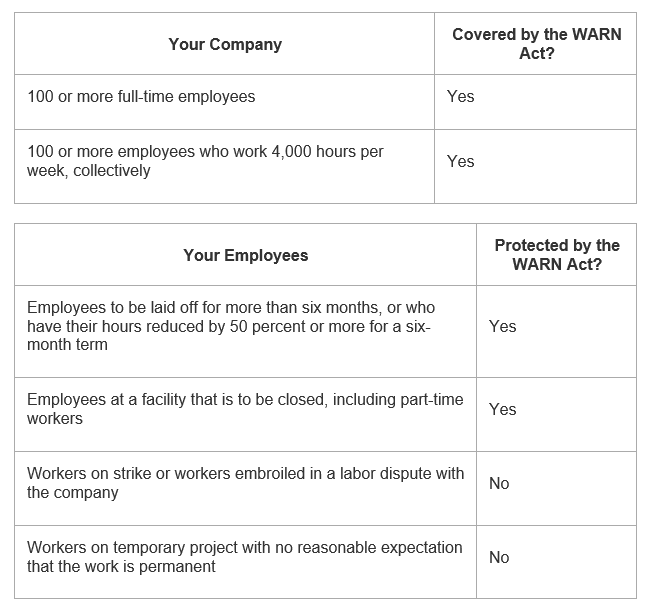
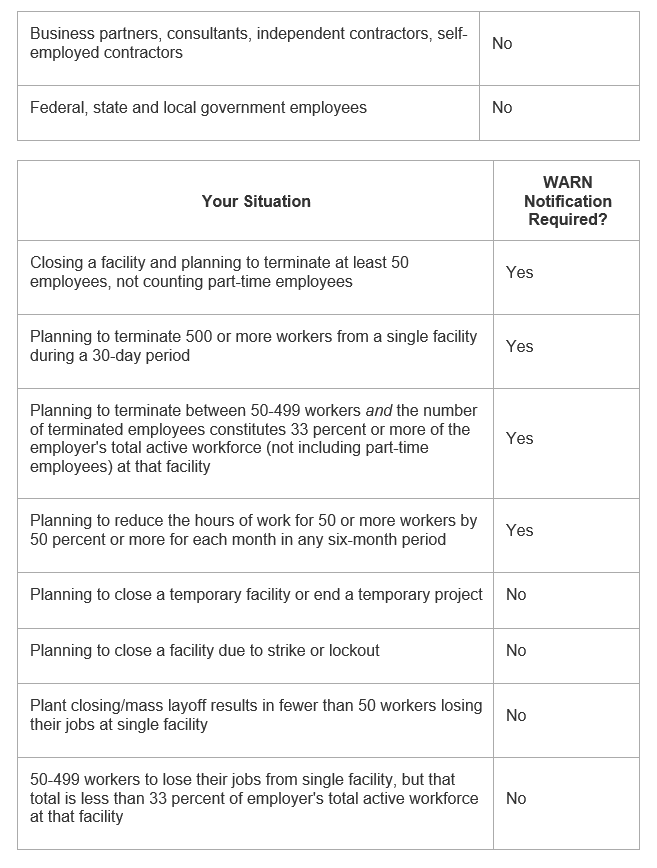
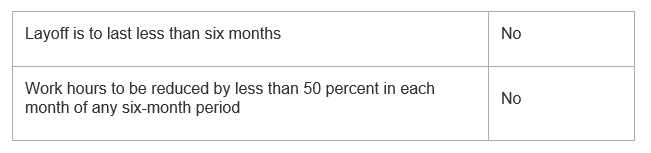
If the employer is not covered, then it need not provide advance notification of an upcoming layoff or RIF. If, on the other hand, the employer is covered and the circumstances require advance notification under the law, the employer must comply with the notification provisions of the WARN Act.
HR consultant Patty McCord, a former chief talent officer at Netflix, told the Wall Street Journal a few years ago, "What most people mean by culture fit is hiring people they'd like to have a beer with."
But the person you might like to have a beer with might not make for the best employee.
- "I just have a really good (or bad) feeling about that candidate."
- "She reminds me of myself!"
- "I'm just not sure how the rest of the team might respond to him."
- "He went to my school."
If you hear those quotes, you may have entered the "comfort zone." That can be dangerous. Culture fit is the catchphrase often used if a candidate does not mirror what they like, what they are used to, and what is easiest to work with.
A worst-case scenario is that using irrelevant "fit" criteria could lead to discrimination claims. It is important that job descriptions and interview processes be relevant and consistent.
- A candidate's ideal workplace environment (e.g., independent vs. collaborative, office-centric vs. remote);
- How a candidate responds to or works through stress or how they handle disappointment;
- Lessons learned from a mistake the candidate made in the past;
- Views on what organizations should do to maximize employee engagement; and
- The reason(s) for a candidate's interest in the company.
-
Recognizing signs of impairment; and
-
Properly documenting those signs when present.
-
A supervisor or manager has observed directly that something is amiss (e.g., involvement in a workplace incident or accident resulting in property damage);
-
An employer receives a report from a worker regarding possible impairment or drug or alcohol use; or
-
The employer receives a complaint from a customer or vendor.
- Document observations as close in time to the occurrence or event as possible;
- Ensure observations are:
- Specific;
- Articulable; and
- Contemporaneous.
- Employee information, such as full name;
- Date of observation;
- Time of observation; and
- Location of observation.
- Walking. Notations include steady, unsteady, swaying, stumbling, staggering, dizziness, holding on for balance, falling or an inability to walk;
- Standing. Notations include steady, unsteady, holding on for balance, falling or an inability to stand;
- Movements. Notations include tremors, twitches, lack of coordination, fidgeting, muscle stiffness;
- Eyes. Notations include bloodshot, watery or glassy; whether the eyelids are droopy, heavy or closed; and whether the pupils are dilated;
- Appearance. Notations include whether a subject's appearance is tidy or untidy, disheveled, messy or dirty; whether the subject is fully or partially dressed; whether the subject's clothing is stained and if there is evidence of bodily excrement on clothing; evidence of sores or puncture marks on the body; excessive sweating; apparent chills.
- Face. Notations include sweaty, flushed, peaked, swollen, droopy or pale;
- Speech. Notations include whether the subject's speech is slow, slurred, shouting, profane, rambling, excessive talking, incoherent, slobbering, loud, silent or whispering; and
- Odors. Notations include body odor; bodily excrement odor; faint or strong alcoholic odor; smell of marijuana; excessive cologne.
- Demeanor. Notations include whether the subject is silent, sleepy, lethargic, fatigued, crying, talkative, highly excited, aggressive or combative, abusive (either verbally or physically), nervous, irritable, confused, inattentive, erratic, paranoid, exhibiting mood swings, euphoric, increased self-confidence or unable to feel pain;
- Actions. Notations include erratic, hostile, fighting, threatening, hyperactive, carelessness in executing tasks, forgetfulness, trouble concentrating, repetitive motions or behaviors, excessive itching or scratching or reduced appetite/skipping meals; and
- Energy level. Notations include highly energetic, highly active, lethargic, depressed reflexes, delayed reactions or unconscious.
- Any drugs present in the workplace. Notations of powders, pills, tablets, crystals, liquids, or marijuana cigarettes should be documented;
- Any paraphernalia present in the workplace. These include any pipes, bongs, needles, razor blades, mirrors;
- Any notable objects present, such as flasks, bottles, or cans;
- Any over-the-counter medications;
- Any inhalants present, such as glue; and
- Any overheard conversations regarding alcohol or drug use. These may include any references to street names, slang, or alternative names of drugs.
- Frequent or continuous absences from work;
- Patterns of lateness to work;
- Any workplace accidents or notable/unusual incidents; and
- Poor performance or misconduct issues.
- Returning to work;
- Being referred for drug and/or alcohol testing;
- Being referred to an employee assistance program (EAP);
- Being referred for training;
- Being subject to corrective action for poor performance or misconduct.
- A business casual dress code policy;
- A more formal dress code policy;
- A casual dress code policy; and
- Uniforms.
The employer should choose a policy based on its specific goals and the job duties of the employees the policy was created for. For example, if most employees are involved in some form of manual labor, it is not practical to require them to dress in formal dress or even business casual attire. Having clear goals and reasons for having a particular dress code policy also will help employers and supervisors in explaining the policy to employees if they question the reasons for having to dress in a certain manner.
Employers may have to enforce more than one type of dress code policy. Employers may have different policies for different types of employees or may have summer dress code policies, or policies for more casual attire. Knowing what policy is relevant to every employee is essential, and should be clear for both the employees and the employer.
- Post a copy of the policy in visible areas including employee rest areas, like the employee lounge, and on the employer's intranet if possible.
- Publish the dress code policy in the employee handbook and require that new employees sign and acknowledge that they have received and understand the dress code policy and consent to its terms.
- Distribute a copy of the dress code policy to all employees, and new copies again to all employees if any changes are made or during the summer months when employees may be permitted to dress more casually.
- Example: NOTICE as of January 1, employees will be allowed to wear more casual dress to work on Fridays. [Enter Employer Name] is adopting a "Casual Friday Policy" on a temporary basis.
- Provide employees with regular reminders about the existence of the dress code policy.
- If there is a need for more specific guidance, post pictures on what is and is not permissible under the dress code policy, or demonstrations on appropriate clothing for work.
Example: If one employee wears a revealing shirt to work, and it is a busy day so the supervisor says nothing, it will be very difficult to tell another employee that they have to go home and change if they later wear a similarly revealing outfit.
- Ask if the employee realizes that they are violating the dress code;
- Explain which items of the employee's attire specifically violate the dress code;
- Do not pass judgment on any of these items; and
- Do not criticize the employee's style.
Make sure that the employee is not seeking some sort of accommodation to the dress code policy based on religion or disability. If the employee is seeking an accommodation, the issue may have to be investigated further. It is important to remind the violating employee, and other employees, that if an employee is seeking an accommodation, the employee should request the accommodation before wearing the offending clothes to work.
When possible, the employer should make every effort to accommodate legitimate reasons that an employee has for violating the dress code policy such as religious beliefs or practices. For example, an employee may seek to wear a head covering or a certain hairstyle or refrain from wearing certain garments based on their religious beliefs. If a supervisor has a question about how to enforce the policy with regard to accommodation issues, the supervisor should contact HR. The employer should convey that it cares about the reasons behind why the employee violated the policy and that the employer will do everything possible to address those reasons.
Example: If the employee is wearing a torn or stained uniform, but there is a clean uniform on-site, the employee can be told to change.
Example: A female employee is wearing an overly revealing spaghetti strap tank-top, but has a sweater, which can be used to cover her shoulders.
If there is no way to fix the dress code violation without sending the employee home, send the employee home and tell them to take the rest of the day off, since it is not practical to come back to work after changing. Hourly employees should be given the choice of using their accrued vacation days to cover the time off, or not being paid for that day. Supervisors should not become personally invested in the situation and should act professionally at all times.
After every violation, the supervisor should record the violation in a log so that is a written record of employee violations on a going-forward basis, and so that corrective action measures are conducted in the most transparent manner possible. The supervisor should write the date when the violation occurred, explain the scope of the violation, and record the measures taken to deliver corrective action to the employee or to counsel the employee so as to prevent a recurring situation.
When the employer or supervisor notices that a particular employee has violated the policy several times, even before another violation occurs, it may be prudent to take the employee aside and again warn the employee of the corrective action measures that will be taken if there are any further violations. This may prevent the employer from having to suspend or terminate the employee when the dress code policy is violated another time.
Further, an employer should also remember that a dress code for union employees is a mandatory subject of bargaining. Accordingly, an employer is required to bargain with any unions regarding a dress code before unilaterally imposing one.
- A compulsion to work long, hard hours to the exclusion of personal commitments and responsibilities;
- A focus on quantity, rather than quality, of work;
- Physical ailments such as headaches, fatigue, indigestion, and chest pain;
- Behavioral issues, including temper tantrums, restlessness, insomnia, impatience, mood swings, and forgetfulness;
- Mental and emotional reactions such as anxiety, paranoia, and a lack of self-confidence or self-esteem; and
- Difficulty supervising others due to a need to control, an inability to delegate, and a tendency to micro-manage.
In addition, workaholism may contribute to workplace difficulties among co-workers, such as low morale, absenteeism, and high turnover.
- Out of a desire to get ahead in their career;
- Because of an excessive workload brought about by short staffing;
- Due to poor work habits or improper training;
- To work on a temporary, short-term project;
- Due to normal seasonal increases in workload; or
- As a way to avoid personal problems or issues.
- Get insufficient sleep and exercise;
- Have poor eating or personal habits;
- Continue working during non-routine work hours (such as evenings and weekends);
- Frequently take work home with them;
- Strive for and rarely achieve perfection in their work;
- Miss personal and family events due to work commitments; and
- Refuse to take vacations or continue to work while on vacation.
- Attendance;
- Company benefits;
- Overtime pay;
- Time off, including vacation, sick leave, and leaves of absence;
- Work-life initiatives;
- Antiharassment, bullying, or workplace violence; and
- Workers' compensation.
- Avoid making accusations;
- State specifics about what was observed and any related concerns;
- Be empathetic, respectful and maintain a professional tone;
- Stay on topic and control the conversation; and
- Listen to what the employee has to say.
- Professional counseling through an employee assistance program (EAP) or other mental health program;
- Establishment of boundaries regarding work, including strict starting and ending times;
- Restrictions on an employee's mobile devices, such as a mobile phone, personal digital assistant (PDA) or laptop;
- Mandatory time off, such as a vacation or leave of absence;
- Supervisory training with specific focus on the elimination of disruptive behaviors such as micro-management and poor delegation skills; and
- Redefinition of the employee's work role or reassignment of workload.
Overcome an employee's resistance to acknowledging a problem and encourage employees to accept help by motivating them to change their behavior in a positive way.
As with any workplace issue, more than one discussion regarding an employee's performance problem may be required. These discussions may take place over a period of time and typically increase in formality.
Ultimately, if there is no change in behavior, an employer may administer corrective action to correct performance or work conduct deficiencies.
Any agreements or alternative arrangements, such as reduced hours or adjustments to work schedules, made with an employee with caregiving responsibilities should be properly documented to avoid confusion later.
Although employees with caregiving responsibilities are still responsible for competently performing their job duties, it is wise for an employer to double-check its policies and the application of those policies to see if there is an adverse impact on employees with caregiving responsibilities.
Employers looking to tap into the talent pool for returning vets have many other options available as well provided they are willing to go beyond their normal search. These options may include:
-
Placing advertisements in military-focused publications or niche job boards;
-
Looking for ads about job fairs for veterans, the military, and their families;
-
Meeting local labor department representatives designated to work with veteran job seekers;
-
Using specialized LinkedIn groups to spread the word; and
-
Connecting with college career centers to find qualified vets who returned to school.
Employers also may turn to websites such as www.hireveterans.com and Employer Support of the Guard and Reserve to post jobs and find out about other ways to connect with job candidates who are veterans.
Certain supervisors may have knee-jerk reactions about job candidates with a military background. These perceptions may include that such candidates will:
- Just follow orders when initiative is what's needed;
- Lack the minimum years of experience or educational requirements;
- Get called up for service or need to relocate more so than other applicants; or
- Bring the risk of post-traumatic stress disorder (PTSD) into the workplace.
These perceptions should be addressed through training. For instance, a veteran who lacks a fixed amount of private employment experience may have acquired skills in the military that are transferable to the workforce. Also, stereotypes about veteran applicants being susceptible to recall or PTSD may run afoul of federal employment laws such as the Americans with Disabilities Act (ADA) or the Uniformed Services Employment and Reemployment Rights Act of 1994 (USERRA).
For example, asking about specific day-to-day activities in the military may enable the interviewer to learn about useful experiences an applicant has had that could help the employer. This may also prove true in asking what challenges they were facing or what kind of training they received. Drawing veterans out in this fashion makes it simpler to see how their skills might translate to the civilian workforce.
Knowing what NOT to ask is equally important. Just as it would be inappropriate to ask female applicants if they are planning to start a family, employers should not ask veterans if they are currently on reserve status and, if so, if they will be deployed soon. Another inappropriate question would be asking if the applicant received "anything other than an honorable discharge."
The ADA also offers protections to applicants with disabilities, including veterans who may have been injured while serving. Title I of the ADA prohibits an employer from treating an applicant unfavorably in all aspects of employment - including hiring - because they have a disability, a history of having a disability, or because the employer regards them as having a disability. However, an employer may still ask a veteran with a disability how they can perform the essential functions of the job.
In addition, some states offer additional protections for individuals who have served in the military. Employers should identify these laws and make sure they are understood.
In addition, veterans are used to working with training plans so the employer should explain how the veteran will be trained to handle new job duties. It also is a good idea to ensure frequent "check-in" periods during the first weeks and months of employment.
Other employees may be permitted to take time off under federal or state family and medical leave acts in order to treat domestic violence injuries if the injuries rise to the level of a serious health condition. Further, some employers may adopt procedures that allow employees to use sick time, vacation time, personal time or disability leave to take time off for domestic violence issues.
- A belief that management is not truly interested in employees' ideas;
- A slow response to employees' suggestions;
- Insufficient explanation about why a suggestion is accepted or rejected;
- Too many rules surrounding participation;
- Concern over biased judgments about which suggestions to approve or disapprove; and
- An inconsistent, unpredictable, or unacceptable reward and recognition system.
- Make money for the organization;
- Help the organization achieve one or more goals;
- Lead to the success of other projects; and
- Improve productivity and morale.
- Customer service;
- Quality and continuous improvement;
- Problem identification and removal;
- Cost reduction; and
- Revenue generation.
- Is easy to understand;
- Is open and above-board in order to eliminate suspicion on how ideas are reviewed and rewarded;
- Provides specific parameters as to what are acceptable and unacceptable suggestions;
- Clearly explains how to submit a suggestion, including the required format and timeframe;
- Sets a time for when all suggestions will be evaluated, such as monthly or quarterly; and
- Communicates all other details of the program, including potential outcomes, the notification process, and rewards and recognition.
- What criteria will be used to judge each idea, such as:
- Innovation;
- Monetary savings;
- Return on investment (ROI);
- Ease of implementation;
- Degree of improvement; and
- Effort involved in developing the idea.
- Who will evaluate each suggestion; and
- The actual process for evaluating each suggestion.
- Cost savings or avoidance;
- Increased revenue;
- Safety improvement;
- Service improvement; or
- Operational improvement.
- Honorable mention at a meeting, in the internal newsletter, or through another communication vehicle for unsuccessful participants;
- Small giveaways, such as a T-shirt or mug, for all participants; and
- An engraved plaque, trophy, or certificate for winning ideas in addition to:
- Time off;
- Gift certificate; or
- Cash reward, such as a percentage of the savings for ideas that lead to cost savings.
- On the organization's website;
- In the employee handbook;
- In the internal newsletter; and
- During new hire orientation.
How Can I Deliver a Positive Employee Experience?
Pivoting from traditional people management models to a broad perspective that encompasses the entire employee experience (EX) ensures that all workers (whether on-site, fully remote or hybrid) thrive within an organization. Prioritizing EX can serve as a competitive advantage for an organization. Therefore, an employer should broaden its focus from one solely of employee engagement and, instead, prioritize the overall employee experience.
However, working toward an excellent employee experience is a complex proposition and touches on all business functions and workplace issues. This guide provides the steps an employer should take to focus on employees and deliver a positive employee experience.
The employee experience is the employee’s perceptions of the interactions they have with the organization.
A positive employee experience will yield increased levels of employee motivation, satisfaction and engagement as natural outcomes. If the workforce is enjoying their whole experience with the organization, then the business will benefit through higher engagement and retention. Employee engagement on the other hand, concerns how connected or committed employees are to the organization at a particular point in time.
A negative experience may lead to increased levels of dissatisfaction, active disengagement and turnover. As a consequence, employee experience is foundational to an organization's business outcomes and viability.
How an organization enables this full experience is critical and, if done well, an output of the process is engagement - enhanced engagement. However, while focusing on employee engagement and overall culture is important, it is not the complete picture. An employer must also focus on every interaction that an employee experiences during the employment relationship.
Step 2: Focus on Each Stage of the Employee Lifecycle
- What employees desire and need regarding work every day; and
- What must be managed and delivered by employers to meet those core needs.
- Employee referrals;
- Online job ads, general job boards;
- Partnerships with secondary institutions;
- Recruiters; and
- Staffing agencies.
- Providing a recruitment experience that is compliant and fair (e.g., complying with federal, state and local laws); and
- Ensuring a competitive total rewards package.
- Implement best practices in onboarding;
- Deliver an accurate and favorable first impression of the workplace;
- Be an efficient and professional process;
- Confirm that the new hire's decision to accept employment at the organization was a favorable one;
- Provide the new hire with all of the information they need to perform their job responsibilities;
- Comply with new hire paperwork and reporting requirements (whether at the federal, state or local levels); and
- Begin the new hire's assimilation process into the organization.
- Competitive compensation and benefits, with a focus on retention programs;
- A focus on health and wellness, whether in or out of the workplace, and the prioritization of the employee's psychological and physical safety and security at work;
- Availability of training and coaching opportunities;
- Meaningful feedback on performance and growth;
- Career development and opportunities for internal mobility and promotion;
- A favorable work/life balance;
- Recognition of a job well done and appreciation for the employee's efforts; and
- A trusting relationship with the organization that values fairness, diversity, and inclusion.
- Voluntary turnover, such as resignation for personal reasons, based on a negative employee experience or for the purposes of retirement; or
- Involuntary turnover, such as a layoff or a termination for misconduct or poor performance.
- A human-centered approach to involuntary separations, with the ultimate goal of treating separating employees with care, dignity and respect; and
- Enabling a separation process for voluntary separations that will:
- Provide the separating employee with all of the information they need to move on;
- Provide the employer with important qualitative data regarding the employee's experience (e.g., through an exit interview); and
- Maintain a positive, trusting relationship with the separating employee, if possible; and
- Create an advocate for the organization post-separation
Depending on the organization, a variety of roles or functions may be responsible for meeting aspects of the core needs of employees. Whatever the distribution of responsibility, leaders must ensure that these core needs are met in order for employees to thrive.
Core needs in the employee experience encompass a number of areas:
-
Organization. Set the overall purpose as an organization, and then:
-
Embed purpose and culture in communications;
-
Support individuals in life events (e.g., policies and practices relating to health and safety, wellness, leaves, workplace flexibility);
-
Enable employee motivation, satisfaction and engagement;
-
Innovate to ensure customer satisfaction and attainment of business goals.
-
Supervisor/management. Support workers by:
-
Listening;
-
Leading with empathy;
-
Ensuring inclusion of all as part of the team; and
-
Providing other means of support on a regular basis (e.g., impromptu check-ins).
-
Work environment. Ensure a pleasant place to work, whether on-site or a remote location and:
-
Ensure an individual has everything necessary to be productive;
-
Provide access to support (IT, reimbursement programs). Invest in tools that will enhance their day-to-day activities; and
-
Invest with a view to enhancing the future of work.
-
Team. Foster a structure that supports continued employee engagement and ensure:
-
Connection to the broader team (e.g., video calls); and
- Frequent acknowledgment of individuals and recognition of contributions to the business.
Embracing an approach that prioritizes the overall employee experience (and not one that prioritizes certain employees, such as top performers or difficult-to-replace roles, over others) leads to a holistic and inclusive practice that focuses on the needs of every employee in the organization.
Treating an employee as their own unique person is a key component to the employee experience. Many organizations have begun focusing on employees in ways that they had only previously done with customers. (In fact, a targeted focus on individual employees will probably yield a more positive customer experience.)
Look to simplify and improve workplace issues. Provide processes and interactions that are seamless for employees, thereby reducing stress and frustration. Optimize points of contact with the employee (whether through applications, portals or in-person interactions). Focus on embracing a growth mindset through agile experiences so that improvements and innovations may be tracked over time.
Whereas experiences may be tailored for broad groups, such as accounting for general diversity or targeting employees who prefer certain workplace flexibility programs, there is also a need to tailor experiences to particular individuals.
In addition, ask for information and listen to employees through a variety of communication methods. For example, you can explore the following in addition to traditional feedback channels (e.g., supervisor check-ins or town hall meetings):
-
Candidate reaction surveys;
-
Onboarding surveys;
-
Training surveys;
-
Employee engagement surveys;
-
Pulse surveys;
-
Total rewards practices surveys; and
-
Exit interviews.
The focus on the individual and the importance of that relationship builds trust, which is indispensable to a positive employee experience.
Focusing on the employee experience is a constant exercise. An organization needs to evaluate the success of any of the business functions and issues that contribute to the employee experience (e.g., leadership and strong management, a positive culture, trust, inclusion, policies and processes, core needs and meaningful work). When reviewing feedback and survey data, information from performance reviews, or intelligence from exit interviews, continue to keep a focus on how to improve the employee experience.
A focus on delivering an excellent employee experience results in positive business outcomes and allows an organization to move from simple survival in a competitive marketplace to true, lasting success. An organization that shows maturity in its approach to employee experience will continue to report favorable business and innovation outcomes.
Poor records management can cost an organization in two primary ways:
- Failure to keep required records can result in fines or other punishments from the government; and
- Failure to retain records of an investigation, claim, or complaint can doom a case.
Accordingly, most companies have detailed document retention policies and schedules that should be followed carefully. In determining proper recordkeeping procedures, the following considerations should be addressed: (i) what to keep and for how long; (ii) what needs to be kept confidential; (iii) where to store records; and (iv) how to destroy the documents that no longer need to be kept.
Whenever in question, the best practice is to ask counsel before destroying any document, especially if it is regarding a contentious employment decision that may lead to litigation
A record is something that an employer needs to keep for a set period of time, either for regulatory, legal, or business reasons. As a first step, it is necessary for an employer to classify what types of documents it has. The easiest way is to create a records inventory.
The records inventory should list the types of documents, the location of the documents, and the volume of each type of document the organization has. However, the records inventory is not a list of specific documents.
An inventory will help the employer keep track of records and be able to locate and manage them. The inventory should include both active documents and ones that are no longer being used but still need to be retained under the law.
Employee personnel files must be current and complete. The types of documents that need to be in the personnel file are those relating to employment decisions, payroll, benefits, training, and performance. Information that may be requested as part of an external investigation, such as I-9 records, health and safety documents, and payroll records, should be maintained in a separate file that is easily accessible if needed. This will allow for easy retrieval and discreet handling of confidential or private information. As a best practice, I-9 records should be accessible only to HR professionals and be kept in a single separate file.
Certain employee documents should never be kept in the personnel file: medical records, genetic information, and investigation records (including polygraphs). These records must be kept in separate files. Documents contained in the employee's personnel file should be reviewed periodically and at least annually to ensure that everything is current, accurate, and complete.
While an employer should include all the documents required by law, an employer must refrain from including everything in the personnel file. Unnecessary or unsubstantiated references or criticisms of an employee's private life, political beliefs, race, sex, or religion must be avoided. A good rule of thumb: if an employer would not want a jury to see or hear it, then an employer should not include it.
Many states have statutory requirements that permit employees to review the contents of their personnel files. To comply with these statutes, employers should have policies or practices that allow the organization to easily locate personnel files in response to a request from the employee or an employee representative who is legally permitted to request such files, which should conform to applicable state laws.
Different laws have different requirements for how long a document must be retained. Federal laws require a minimum number of years that a record must be retained, starting from either the date the record is made, or the personnel action is taken, whichever is later. In many instances, if a claim or lawsuit has been filed, all relevant records should be kept until the final disposition of the charge or lawsuit
Click here for a user-friendly chart on federal recordkeeping requirements.
When reviewing how long to retain records, employers should also consider the storage format of their records. Employers should consider whether hard copies will be kept on-site or at a remote location. Documents maintained electronically may not be easily retrievable either because the storage media has deteriorated or become obsolete, or because the information was generated using a format that is no longer readable. Thus, recovery of documents may prove to be impossible or exceedingly expensive.
Employers should maintain information subject to federal laws, such as I-9 records, health and safety documents, and payroll records, in a convenient location for easy retrieval.
When destroying employment-related files, employers should shred or dispose of records in an irretrievable manner, including documents collected as part of an employee background check. Employers should dispose of documents containing individual identifiers, such as Social Security numbers or bank account information, in a secure manner.
Employers should create written logs identifying what information was destroyed and when, including when electronically stored information was destroyed.
Confidentiality of employee records is necessary to avoid potential liabilities from impermissible access or use of information in employee files. Employers should not only consider what employment records are being kept, but also whether certain records should be kept in separate files or maintained on a strict "need-to-know" basis.
Certain federal statutes, including the ADA, FMLA, OSH Act, IRCA and GINA, require that information protected by these laws may not be disclosed generally throughout the workplace or used for reasons other than the reason the information was provided by the employee. Therefore, employers should maintain confidential information about employees, including medical information and I-9 documentation, in files that are separate from ordinary personnel files.
Employers should retain and preserve employee records - including electronic records, such as emails - at the earliest possible opportunity, possibly even before a lawsuit is filed. A court may find that an employer has an obligation to identify, locate, and preserve relevant records as soon as the employer should have reasonably understood that it will face litigation.
When a charge is filed with an agency, such as the Equal Employment Opportunity Commission (EEOC), the employer is required to maintain a record relating to the issues raised in the charge until the matter has been resolved.
If an employer is concerned that a departing employee may have violated a non-compete agreement or engaged in unfair business practices prior to leaving to join a competitor, the employer will want to ensure that the contents of the employee's mobile devices, including a laptop, hard drive, or personal digital assistant (PDA), are not erased after the employee returns this type of electronic equipment.
The employer's instructions regarding its efforts to locate and preserve records should be made in writing and should be retained for the purpose of demonstrating that the employer complied with its potential duty to preserve evidence.
For questions on record retention, please consult with your FrankAdvice HR Consultant.
Understanding Mental Health
Poor mental health can affect the way people think, feel and behave. In some cases, this can seriously disrupt a person's ability to cope with day-to-day life, which in turn can have an impact on their relationships, work and overall quality of life. In light of this, supervisors should keep the mental health and well-being of their employees top of mind, especially in times of immense stress and anxiety.
Good and poor mental health is very individual and can look quite different on different people. For example, one person's presentation of good mental health can be how poor mental health presents in another.
Mental health conditions can develop as a result of experiences in both a person's personal and working lives and may be caused by a series of events, both work- and nonwork-related which, when combined, can trigger or intensify poor mental health. Employees can also be affected directly or indirectly by the mental health of partners, dependents or other family members, as well as that of their friends and colleagues.
There is often a stigma associated with poor mental health. This fear or concern over being stigmatized may prevent people from seeking help from their employer or other sources of support. Supervisors should always be mindful of this perception because it is likely they may not always be aware that an employee may be living with a mental health issue.
Supervisors should also be aware that an employee's mental health condition may qualify for certain protections under federal, state and local laws. For example, a mental impairment, just like a physical impairment, may qualify as a disability under the Americans with Disabilities Act (ADA). An employee whose mental health condition qualifies as a disability under the ADA may be eligible for a reasonable accommodation. Also, an employee living with a mental health condition may be eligible for leave under the Family and Medical Leave Act (FMLA).
Common Mental Health Conditions
An employee's mental health condition may affect the team and the workplace as a whole in a variety of ways. It can influence not only that employee's work performance but the employee's relationships with their supervisor and coworkers. As a result, a supervisor should understand common mental health conditions, the symptoms of these conditions, and how they may affect the afflicted employee and their team.
Different mental health conditions can involve the same symptoms. Someone may experience the symptoms of more than one condition or be given multiple diagnoses at once. Conversely, someone may have no formal diagnosis but still find work and life difficult due to the state of their mental health or a personal situation.
The following are several common mental health conditions:
-
Depression: A person with depression will experience an unusually low mood that is long-lasting and persistent. Other symptoms can include feelings of unhappiness and hopelessness, crying, a lack of energy, low confidence, changes in weight, little or no appetite, feelings of guilt, and no longer enjoying activities that they usually do.
-
Anxiety: A person can experience anxiety in many different ways, but when it becomes extreme and where levels of fear and worry become severe, a range of disorders may be triggered. Some symptoms include feeling nervous, restless or tense, having a sense of impending danger, panic or doom, and having an increased heart rate.
-
Panic attacks: An extremely heightened state of anxiety can trigger a panic attack, which can be brought on in a matter of minutes. Intense fear or discomfort can quickly create an accelerated heart rate, sweating, trembling, shaking and breathlessness.
-
Obsessive compulsive disorder: A person with an obsessive-compulsive disorder has unwanted thoughts or images that continually enter their mind, causing them extreme anxiety. They develop a range of behaviors that they feel compelled to perform to ease the anxiety caused by the obsessive thoughts.
-
Bipolar disorder: Someone with bipolar disorder moves between periods of mania (highs) and periods of depression (lows). Highs and lows can vary in intensity and can last for days, weeks or even months.
-
Psychosis: A person suffering from psychosis perceives and interprets things very differently from others. The main symptoms include hallucinations (seeing and hearing things that do not exist) and delusions (having staunch beliefs in things that are not shared by others). A common delusion is that there is a conspiracy to harm them.
While it may not rise to the level of a formal diagnosis, stress is certainly a mental health concern that supervisors should be aware of, as it is one of the most prevalent issues employees face. Stressed employees may often be careless, frequently absent or tardy and tend to burn out quickly. Other symptoms include worry, anxiety, negative thinking, irregular sleeping patterns and behavioral problems.
The Warning Signs
Creating a personal connection with the team members is one of the most important elements of being an effective supervisor. Through regular one-to-one catch-ups with individual employees and check-ins with the team, together with their observations on how someone is generally performing, a supervisor may be able to identify potential issues early, before they develop into more serious problems.
Below are some of the potential early warning signs of poor mental health. However, a supervisor should not assume that an individual who displays some or all of these signs is experiencing poor mental health. It could be a sign of a different health issue or something else entirely.
Physical signs include:
- Tiredness;
- Aches and pains, headaches and sweats;
- Poor sleep;
- A feeling of being run down all the time;
- Weight loss or gain; and/or
- Presenting a disheveled appearance.
Emotional and psychological signs include:
- Anxiousness or a feeling of distress;
- Loss of confidence and/or motivation;
- Mood swings;
- Aggression and/or tearfulness;
- A sense of feeling low and/or confused;
- Difficulty relaxing;
- Struggle to absorb information; and/or
- Lapses in memory.
Behavioral signs include:
- Withdrawn at work;
- Less contribution in meetings, activities and tasks;
- Decreased productivity;
- Unusual hours at work - arriving early, leaving late, emailing on the weekend or when on leave; arriving late, leaving early and taking long lunches;
- Increased absenteeism;
- Restlessness;
- Inconsistent performance;
- Tendency to overreact to problems; and/or
- Taking risks that are excessive or out of character.
The most important thing is to notice changes to an employee's typical work habits, behavior or personality; people generally do not change without reason. If an individual tends to be quiet or introverted, that may be how they feel most comfortable. However, if someone who is normally gregarious starts to withdraw from interaction with others, that is something that the supervisor should note and explore with that employee.
A Welcoming Place to Share
It will not always be obvious to a supervisor or even to the individuals themselves that they are suffering from poor mental health. So how does a supervisor go about ensuring that the employees on their team are doing well? The starting point is simply to ask them.
A supervisor can help to shape the dynamic across the team by encouraging others to speak up about their feelings and emotions, should they feel the need. A practice that a supervisor can incorporate into their regular team meetings is to have the team members check in with each other at the beginning of each meeting. As a group, go around the room and ask everyone to share what is going on for them at that moment, whether at work or home, any upcoming events - big or small - that they are worried or excited about, etc.
This practice will give employees an opportunity to open up and share some of the things that might be on their minds. It also gives the supervisor an opportunity to get to know their team on a slightly deeper level, giving them valuable insights into what the employees have going on and what the supervisor can do to support them. Be mindful that, depending on the team, it might be appropriate to limit sharing to work concerns and for the supervisor to check in with their team about what is going on for them outside work at individual catch-ups. Also, do not pressure employees to share personal information. Let them set the pace and share whatever information about their private lives they feel comfortable sharing.
The supervisor should also share - they need to lead by example. A supervisor talking honestly about their challenges can help foster a culture where employees feel more comfortable doing so themselves. Set some ground rules, though. For example, make sure that everyone is aware that this is not a therapeutic space; disclosure should be appropriate and team members should be aware that they are not there to try and solve someone else's problems.
Be aware that this practice will not be right for all teams or in all work environments. If the supervisor thinks that it is unlikely that employees will open up, try something else, such as smaller voluntary well-being sessions, where the supervisor and a smaller group of employees check in with one other in this way.
Don't let this practice fizzle out. Consistency is key and regular check-ins, among other things, act as a reminder that it is normal to have issues outside work and to feel sometimes overwhelmed - that's part of being human!
Do make sure that you follow up on anything raised during the weekly check-in if appropriate. This might involve directing the individual to professional services inside or outside the organization.
Do be aware that while fostering an environment where we normalize conversations around thoughts and feelings is important, some employees will be less happy to share than others. Don't force them, but perhaps think about catching up with them on a one-to-one basis.
Don't push employees to share in individual catch-ups either, and make sure they know they are not obliged. However, do make sure that everyone knows how to access internal and external support.
Considerations When Speaking to an Employee About Mental Health Concerns
Suppose the supervisor is concerned that an employee is displaying early warning signs of poor mental health. In that case, it is important that the supervisor has a conversation with the employee sooner rather than later. Timing is critical; do not wait for the individual to display serious warning signs. If the supervisor has genuine concerns, have a conversation with them before the situation deteriorates.
Location. Choose a quiet, private space to hold the conversation. If the individual works remotely, consider whether it is possible to hold the conversation in person.
Set aside enough time and be present. Ensure that there will be no interruptions during the meeting. The supervisor should not give the impression that they have little or no time for the meeting or that it is just another thing that they need to cross off their to-do list. Looking at their phone toward the end of the allotted time, rushing off to another meeting or taking a call will not demonstrate concern.
Be aware of nonverbal communication. A significant proportion of our communication is non-verbal through body language, facial expressions and tone of voice. It is important that the supervisor is aware of their nonverbal communication during the conversation (and when talking to their team generally), as they can strengthen or undermine their attempt to have a productive discussion.
Listen. The supervisor should encourage the employee to open up by assuring them that they are concerned and there to help. The supervisor must remember that they are not a medical professional and it is not their role to diagnose someone or try and solve their problems. Often people simply need to be heard.
The supervisor worrying that they need to solve the person's problems is very likely to get in the way of listening effectively and being a genuine source of support. Do not feel the need to fill any silences. Silence can be very powerful - the person may be thinking about the question they were just asked or absorbing what they have just said aloud.
Be open-minded and mindful of the language used. The supervisor may wish to mirror the language used by the employee - this should help put the employee at ease. Mirroring the other person's pace may also help to relax them. It is absolutely critical that the supervisor is not judgmental or dismissive in their manner or responses. Similarly, they should not make assumptions about the employee or their situation.
Be aware that people can have different experiences of the same mental health condition. For example, two people who have been diagnosed with depression may experience it differently and therefore have different needs. Focus on the individual, not their diagnosis. Take the time to summarize what was said and try reflecting back on some of those things. For example, the supervisor may say, "you said earlier that you felt devastated by what happened last week; tell me more about that."
Consider requests for reasonable accommodations. As stated above, a mental health condition that qualifies as a mental impairment is considered a disability under the ADA and an employee may be entitled to reasonable accommodation. A reasonable accommodation is a reasonable adjustment to a job or work environment that enables an individual with a disability to equally compete in the workplace and perform the essential duties of the position held or desired. Examples may include a modified work schedule, ability to work from home or permission to bring a service animal into the workplace.
Note that the request does not have to include the words "reasonable accommodation" or any other special terms. The request also does not have to be in writing. All an employee has to do is state, whether orally or in writing, that they need an adjustment or change in the work environment for a reason related to a mental impairment. A supervisor must engage in the interactive process with the employee once they are aware that an accommodation is being sought.
Pay attention to what the person is not saying. Are there any things that they have not mentioned that the supervisor would have expected them to? Are they avoiding certain subjects? These things may also help the supervisor build up a picture of what is going on with the employee.
Consider whether work is a contributing factor. During the course of the conversation, try to establish if there is anything at work that might be contributing to the individual's state of mind. Do not assume that it has nothing to do with work, even if they initially say that everything at work is fine. The supervisor may need to prod a little, with tact and sensitivity, for the employee to feel comfortable enough to disclose any work-related issues.
Address a reluctance to talk. Even though the supervisor may be genuinely concerned about an employee and feel ready to initiate a conversation with them, some individuals may push back or be reluctant to talk. If this happens, the supervisor should not automatically assume that they do not want to talk to anyone. They may not feel comfortable opening up to their supervisor, so consider whether they would find it easier to talk to someone else. The supervisor could ask the employee who that person might be.
Also consider having regular touch-points. Without being too intrusive, the supervisor should check in with the employee again, perhaps a week or so later, to let the employee know that they meant what they said and they are there for the employee, if and when they want to talk.
Further, an employee may see the supervisor as part of the problem. Such a view may or may not be justified and will probably make it difficult for the supervisor to help or otherwise get involved. In this situation, it is less likely that the employee will feel comfortable talking to their supervisor, so the supervisor should identify another person that the employee could speak to, such as an HR representative or someone associated with an employee assistance program (EAP).
Take notes after the conversation. It can be distracting for the supervisor and employee if notes are taken during the conversation, and it is likely to make it harder to establish a rapport, connect with the person or make them feel heard. Immediately after the conversation, the supervisor should take notes of what was said and ensure all internal procedures are followed.
Address next steps. The content of the conversation will determine what the next steps should be. If, for example, the employee said that there are no issues, but the supervisor remains worried about them, the next step may be to follow up with them in a few days, or consider whether someone else may be better suited to talk to them.
If the employee opened up a little but the issues do not seem that serious, or the employee is already accessing help, it may be a case of agreeing to catch up with each other in a week or so (or whatever time period the supervisor thinks appropriate) to see how things are going. The important thing here is that the supervisor keeps the dialogue ongoing.
A supervisor should also be flexible in their approach - the extent to which they need to monitor the situation, the level of support they need to provide and any other actions they need to take. All these steps will vary depending on the severity, nature and complexity of the circumstances. Just like physical health, mental health is fluid and can change from day to day, week to week. A supervisor will need to adapt their support to suit the evolving situation.
Importantly, if there are concerns about the employee's own safety or the safety of others, consider whether to speak to HR, the EAP or other individuals in the organization for support.
Maintain confidentiality of information provided. The ADA requires that all information collected about an employee's illness, including mental health concerns, be kept in a separate, confidential medical file and not intermingled with other personal documents. This information includes documentation relating to the employer's (and supervisor's) deliberations on issues relating to reasonable accommodations. This information should be shared with other supervisors and managers on a need-to-know basis.
Organizational Support
A supervisor should make employees aware of the sources of support the organization offers to those who may have concerns over their mental health. Whether by regular email communications or a wellness seminar, employees need to know that the organization takes their mental health seriously and there is assistance available.
Employee assistance programs. Employee assistance programs (EAPs) play a critical part in promoting the mental health of employees by offering a variety of services on a confidential basis. An employee can call an EAP and get assistance with their mental health concerns, including stress and depression, as well as substance abuse issues.
EAPs can also provide training to supervisors on how to effectively address behavioral problems and determine when they should recommend an EAP to an employee.
Health care benefits. Employer-sponsored health care benefits may be indispensable to an employee suffering from a mental health issue. Health care plans typically include coverage for mental health. Mental health and substance use disorder services, including behavioral health treatment, are considered essential health benefits.
Paid time off. Employees should be encouraged to take advantage of paid time off benefits that may be offered by the organization. Paid time off benefits could come in the form of vacation days, personal days and holidays. A day away from work can benefit an employee who needs a day to "unplug" or catch up on personal matters.
Other benefits. Supervisors should promote other benefits that the organization may offer, including discounts to gyms, skill-building courses or flexible working options.
Self-Care
It is important as a supervisor to realize the role you play in influencing the behaviors of others. If the team sees their supervisor taking active steps to look after their own well-being, they are more likely to do the same. Conversely, if the reality of what employees see from their supervisor is late-night emails, weekend work or an unhealthy work-life balance, employees are less likely to feel empowered and encouraged to take steps to look after themselves.
Providing team members with a safe space where they feel comfortable talking about the state of their mental health is very important. However, it is equally important that the supervisor takes care of themselves and, in doing so, regularly checks their own state of mental and physical well-being.
An employer may need to withdraw an employment offer for a variety of reasons. If an employer determines an employment offer must be withdrawn, the employer should do so as early as possible, preferably before the offer has been accepted. Depending on when the employment offer is rescinded, an employer may be exposed to damages. Following the steps outlined below will help an employer withdraw an employment offer while avoiding potential legal consequences.
Step 1: Make the Employment Offer
The employment offer is made once the employer selects the top candidate for the position. An employment offer may be communicated verbally or in writing. Best practice dictates that offers should be made in writing to avoid any potential misunderstanding that could lead to later disputes. The employment offer should set forth the terms of employment, including start date, job responsibilities, rate of pay, work hours and whether the employment will be at-will or for a fixed duration. Employers must use caution when communicating the employment offer verbally and in writing so that they do not convert the at-will employment relationship into a contractual one.
During the conversation and in the written offer, employers should indicate a date by which the candidate must respond to the employment offer.
Step 2: Confirm Acceptance of the Offer
Acceptance of the employment offer may be in the form of a written letter or a verbal expression of intent to accept the employment offer. Generally, the applicant must take some positive action demonstrating his or her acceptance. This may include providing notice to a current employer or verbally agreeing to a start date with the new employer. Applicants may also accept the offer through a written response indicating their intention to begin work.
Step 3: Determine When to Withdraw an Employment Offer
Depending on when the employment offer is withdrawn, an employer may be exposed to damages. In order to limit potential exposure to damages, if an employer determines an employment offer must be withdrawn, the employer should do so before the offer has been accepted.
However, if an applicant has already indicated his or her acceptance to an employment offer employers may be subject to a legal claim if the offer is withdrawn. For instance, in some states, even if the employer offered at-will employment, if the applicant has accepted the offer and has relied upon the offer, such as by giving notice to a former employer or by relocating, the employer may be exposed to damages. Therefore, employers should consult with local counsel prior to making the decision to withdraw the offer.
Step 4: Evaluate the Reason for Withdrawing an Offer
When an applicant has already accepted the employment offer, the employer should evaluate the reason for withdrawing the offer. For instance, an employer may need to withdraw the offer as a result of a hiring freeze. However, employers must use caution when withdrawing an offer based on this reason, because if an employer knew at the time the offer was communicated to the applicant that a hiring freeze was imminent, the employer may be exposed to damages if it knowingly made a false statement that the applicant relied on to his or her detriment.
Employers may also consider withdrawing an employment offer if the applicant does not successfully meet the conditions for employment. Some common prerequisites of employment are:
- Background checks;
- Reference checks;
- Drug tests; and
- Medical tests.
However, employers must ensure that they comply with both federal and state laws before withdrawing an employment offer based on the results of a background check. For instance, the Fair Credit Reporting Act (FCRA) requires employers to notify the individual prior to taking any adverse action, i.e. withdrawing employment offer, by sending the applicant a "pre-adverse action letter." Included with this letter, the employer should give the applicant a copy of his or her report, a summary of the applicant’s rights under the FCRA, which beginning September 21, 2018 must include a notice of security freeze rights, and should notify the applicant the amount of time he or she has to dispute the contents in the report.
Once the employer makes the decision not to hire an applicant, based in whole or in part on the background report, and after a reasonable amount of time after the pre-adverse action letter is sent to the applicant, the employer must then supply the individual with an "adverse action notice." This notice must include the name, address and telephone number of the consumer reporting agency making the report; a statement that the reporting agency did not make the decision not to hire the applicant and cannot give specific reasons for it; and notice stating that the applicant has a right to dispute the accuracy or completeness of any information contained in the report, and can obtain another free copy of the report from the reporting agency within 60 days.
In addition to FCRA, employers should ensure compliance with any state notification requirements when withdrawing an offer based on a background check.
Further, if a background check reveals a criminal conviction, prior to withdrawing the offer, employers should consider whether the conviction is relevant to the job or there is another legitimate business reason. A blanket "no criminal record" policy is not advisable. Instead, it is best to establish a clear link between what is being screened for in the background check and the job duties. Old and non-serious convictions may have little or no bearing on an applicant's ability to do the job now. Also, some states limit the number of years a background check can span. In addition, employers should not treat arrests and convictions the same. The Equal Employment Opportunity Commission warns that because an arrest is not a finding of guilt and may have a disparate impact on minorities, employers making any decision based upon an arrest should consider the nature of the job applied for, the nature and seriousness of the alleged offense and the temporal proximity between the offense and the employment application. Arrest records appear on consumer reports for a maximum of seven years. However, some states have laws preventing employers from using an applicant's arrest record for employment purposes altogether.
Employers may withdraw conditional job offers when the applicant has falsified the information on the job application. Reference checks provides an employer an opportunity to verify the information contained in the job application, such as the applicant's dates of employment, job title and salary. However, prior to conducting the reference check, employers should require the job applicant to sign a written waiver and release authorizing the employer to make all necessary inquiries of prior employers and any other references. Further, in order to minimize liability, employers should uniformly conduct reference checks for all similarly situated job applicants at the same stage of consideration in the hiring process.
With respect to drug testing, employers should be aware that drug tests may not always be accurate. As a result, employers must be able to confirm the accuracy of any drug-testing program, including chain-of-custody procedures and tampering safeguards before taking any employment actions. Further, prior to withdrawing an employment offer employers must comply with any state requirements mandating that they give an applicant an opportunity to contest the test results.
Preemployment medical examinations can lead to potential issues under state and federal disability laws. Employers may withdraw an offer if the reason for withdrawal is job-related and consistent with business necessity. However, employers may not withdraw an offer because an examination reveals a disability that does not prevent the applicant from working. Employers may be required to reasonably accommodate qualified individuals with a disability unless doing so would impose an undue hardship to an employer's business. The duty to accommodate extends to job applicants.
Step 5: Inform the Individual of the Withdrawal
Employers should notify the applicant as soon as the decision has been made to withdraw the employment offer. When notifying the applicant, employers should ensure compliance with FCRA and any state notification requirements.
In the event there are no specific state or federal requirements that apply to the reason for the withdrawal, as a best practice employers should communicate the withdrawn offer in writing. Employers should send such a communication with a way to track and confirm the applicant has received the communication.
The letter should set forth the position, the date the position was offered and the reason or cause for the offer being withdrawn. It is important that the reason for the withdrawal be placed in writing in order to avoid future disputes. Employers may want to consider using the following format:
[ENTER DATE]
[ENTER APPLICANT NAME]
[ENTER APPLICANT ADDRESS]
Dear [ENTER APPLICANT NAME],
On [ENTER DATE], you were offered employment with [ENTER EMPLOYER NAME] as [ENTER POSITION TITLE].
This letter serves to notify you that your employment offer with [ENTER EMPLOYER NAME] is withdrawn as a result of [ENTER REASON].
Sincerely,
[ENTER SIGNATURE]
[ENTER TITLE]
Reach out to your FrankAdvice HR Consultant for guidance as needed.
Union drives at a popular coffee chain have been in the headlines and the National Labor Relations Board (NLRB) is expected to expand worker protections in 2022. Unionization was 6.1% of the private sector in 2021, according to the Bureau of Labor Statistics (BLR). The unionization of public sector workers, 33.9%, was more than five times the private sector.
A high level of employee satisfaction and good communication are important tactics to remain union-free. If there are signs of union activity in the workplace, such as employees talking about a union or employee rights, off-site meetings or other changes in employee behavior, an employer generally has the right to engage in lawful efforts to resist unionization. An employer is allowed to provide employees with information and can convey that it hopes employees will refrain from signing a union card till they have all the facts. Share information about the competitive pay and benefits provided by the company and emphasize the practices that make the organization a great place to work. An employer can tell employees why it feels a union is not needed.
If an employer is faced with a petition for union representation, it should respond quickly to comply with legal deadlines and if it opposes unionization, to conduct an effective union avoidance campaign. It is advised to consult with legal counsel.
Use the steps below to help determine how to respond to a union's petition to unionize a group of employees in the workplace and to prepare for a secret ballot union representation election conducted by the National Labor Relations Board (NLRB). Employers should complete the following steps in sequential order.
- Review the Certification of Representative Petition (NLRB Form 502 (RC)) and the Description of Representation Case Procedures (NLRB Form 4812) served by the union.
- Confirm whether the NLRB has determined that the petition and showing of interest are sufficient.
- Review the Notice of Representation Hearing and other forms and note the dates set for filing the required Statement of Position and for the pre-election hearing.
- Review and evaluate the information in the union's petition regarding the makeup of the proposed bargaining unit and determine whether any of the details should be disputed.
- Identify and document any issues to raise during the pre-election hearing.
- Consider whether to enter into an election consent agreement with the union and avoid the pre-election hearing.
- File a request to postpone the pre-election hearing, if needed, and serve a copy of the request to all parties.
- Be aware that a hearing may be postponed for a length of postponement determined to be appropriate by the regional director.
- Include a request for an extension for the Statement of Position due date, if needed.
2. Post and Distribute the Notice of Petition for Election to Employees
- Post the Notice of Petition for Election in conspicuous places and where notices to employees are customarily posted within five business days after receiving it.
- Distribute the Notice of Petition for Election electronically if this method is customarily used to communicate with employees.
- Maintain the posting of the Notice of Petition for Election until the petition is dismissed or withdrawn or it is replaced by a Notice of Election.
3. File the Statement of Position and Voter List
- Within eight business days after service of the petition, file a Statement of Position (NLRB Form 505) with the NLRB setting forth any basis for objecting to the election.
- If the proposed bargaining unit is being challenged:
- Provide the classifications, locations or other employee groupings that must be added to or excluded from the proposed unit to make it an appropriate unit.
- Provide an alphabetized list of the full names, work locations, shifts and job classifications of all employees in the proposed unit.
4. Participate in the Pre-Election Hearing
- If there was no election consent agreement, attend the pre-election hearing to litigate those issues that are necessary to determine whether it is appropriate to conduct an election:
- Introduce evidence to support the employer objections.
- Call, examine and cross-examine witnesses.
- Make oral arguments on the record at the close of the hearing.
- File any post-hearing brief within five business days after close of the hearing.
5. Review the Direction of Election
- If an election is ordered, review the Direction of Election and Notice of Election for details as to the:
- Type of voting;
- Eligibility period; and
- Date(s), time(s) and location(s) of the election.
6. Submit the Final Voter List
- Within two business days after the issuance of the Direction of Election or the approval of an election agreement, electronically provide a final voter list to the NLRB Regional Director and the union.
- Include in the voter list each eligible voter's:
- Full name;
- Work location;
- Shifts;
- Job classification; and
- Contact information (including home addresses, available personal email addresses and available home and personal cell telephone numbers).
- Include in a separate section of the voter list the same information for individuals who will be permitted to vote subject to challenge based on the parties' agreement or the direction of election.
7. Post and Distribute the Notice of Election to Employees
- Within five business days after approval of an election agreement or the issuance of the Notice of Election, post the Notice of Election in conspicuous places and where notices to employees are customarily posted.
- Post the Notice at least three full working days (excluding Saturdays, Sundays, and holidays) prior to 12:01 a.m. on the day of the election.
- Distribute the Notice of Election electronically if this method is customarily used to communicate with employees.
8. Conduct a Campaign to Persuade Employees to Vote Against Unionization
- Hold meetings with employees to educate the employees of the realities, risks and costs of unionization.
- Post informational notices explaining the reasons against voting for a union on bulletin boards and intranet sites and convey the message in emails and letters sent to employees at their homes.
- Provide managers and supervisors with lawful talking points and answers for employees who ask questions.
- Remind managers and supervisors to avoid threats, interrogations, promises or surveillance.
9. Participate in the Secret Ballot Election
- Inspect the polling place and the voting eligibility list.
- Arrange to have one or two observers present to challenge ineligible voters.
- Determine whether there was any conduct by the union or employees that affected the result of the election and file any objections within seven days of the election ballot tally.
- If the final tally of ballots shows the majority of the eligible employees voted in favor of union representation, consider the union to have won the election.
Tips
The best way to avoid having to respond to a union representation petition is to prepare and implement a union-avoidance strategy before a union organizing attempt is made. Employees who feel aggrieved are more likely to sign union authorization cards.
If a union obtains signed authorization cards from at least 30 percent of the employees in its targeted group of voters (i.e., a showing of interest), it may file a signed petition for representation with the NLRB. A proactive union-avoidance strategy is designed to foster good employer-employee relations and includes:
- Adopting a union avoidance policy and a distribution and solicitation policy;
- Training managers and supervisors to recognize signs of a union organizing campaign and reviewing regularly their rights and obligations;
- Establishing clear communication channels and a workplace environment that provides fair, consistent and respectful treatment of employees; and
- Providing channels for employees to address their concerns.
An employer has a statutory right to tell its employees that it opposes unions and to give its side of the argument through mandatory meetings and the distribution of information. However, it is important to understand what can and cannot be said in order to comply with federal laws dealing with union election campaigns.
Exercise caution before agreeing to a union's demand for recognition without a secret ballot election when presented with a showing of interest of more than 50 percent of employees in the proposed bargaining unit. Employees who are not persuaded into unionizing may sign cards just to get the union organizer to stop bothering them, believing they have not made a commitment.
An employer or supervisors should not examine any signed authorization cards presented to them. When more than 50 percent of employees in the union's targeted voting group have signed cards, examination of the cards might forfeit an employer's right to a secret ballot election.
If the employer fails to post or distribute the Notice of Petition for Election, the election may be set aside and decided in the union's favor.
An employee referral program is a recruiting strategy in which employers encourage their employees to refer qualified candidates for jobs in the company. A key principle behind an employee referral program is that your employees can help with good applicants for your organization. Instead of just using traditional hiring methods, such as job boards, you can ask your employees for help. Encourage them to share job openings to their network and offer a reward if their referral is hired.
While you should be using a variety of recruiting methods, consider some of the benefits that can come with implementing an employee referral program.
1. Greater Employment Brand Opportunity
Employees can be the company’s greatest advocates—and the more they talk, the better. The majority of job seekers consider the employer’s brand and reputation before applying for a position.
These programs also encourage current employees to think about the positives of working for your firm and then go about spreading the word to their network. Even when the employee doesn’t have a specific person in mind, the right incentive can result in social media posts and other forms of sharing on a large scale.
When employees refer their family or friends, they are likely recommending people who carry the qualities required to succeed with your firm. Current employees understand their referral’s strengths and weaknesses. They know the referral’s performance will reflect on them.
Your current employees may mentor the preferred candidate throughout the hiring process. While this may seem like an unfair advantage, it is actually beneficial for all. For instance, the new hire will already be familiar with the responsibilities and expectations of the organization even before the required onboarding.
“Culture” is a big buzzword in the business world for a good reason. Organizations with rich company culture typically have lower turnover. What’s better, a solid positive corporate culture generates happier and more productive workers.
Strong company culture isn’t easy to foster. Luckily, your employees already understand these values and will refer contacts they think are the right fit. This means you are more likely to end up with applicants who understand and share your organization’s values. Additionally, having a friend (s) at work tends to lead to higher levels of employee job satisfaction and retention.
A well-designed employee referral program helps with recruitment and with retention. The program should not be too complicated to use. Determine the process, participation rules, and appropriate rewards for participation. A typical reward is a bonus payment, but options also include items such as a gift card or an extra day off. You can show recognition in the company newsletter or a company meeting.
Review your program on a frequent basis. Analyze the quality of hires, the retention rate of new hires that were referred, as well as workplace participation in the employee referral program. If workforce diversity is negatively affected by the program, it may need to be re-evaluated.
Many businesses can find the hiring process quite challenging. By leveraging a well-optimized employee referral program, you can reduce some of that stress. Finding suitable candidates gets a little easier. Offering a seamless interview and onboarding process for new hires and rewarding your employees for referrals will also boost employee engagement levels across the board. As a result, workers may be more loyal to your organization.
You can reach out to your FrankAdvice HR Consultant for guidance.
The following chart indicates whether an employee in each state has the right to inspect or copy the employee's personnel file. Click to download the chart here.
For questions on how to handle a request for access to an employee personnel file reach out to your FrankAdvice HR Consultant.
Every employer will have a different approach toward performance appraisals, also known as performance reviews or evaluations. Some employers use them solely as an evaluation tool to record performance, track progress and determine compensation. Others use it for employee development, motivation and retention. They consider it as part of an ongoing dialogue between an employee and his or her supervisor. Other employers view it as both - a review tool and a development tool.
Performance appraisals should reflect the organization's business goals and values and take into account the types of behavior the employer would like to encourage among its employees.
Performance appraisals are used in a variety of HR decisions, such as compensation, promotion, and termination. This is especially true of termination decisions. A well-crafted evaluation can help stave off a discrimination claim, whereas a sloppy or incomplete one could help the employee make his or her case against the employer.
Regardless of why an employer gives performance evaluations, it should follow general guidelines for developing the appraisal and delivering it.
- Timing. The employer should decide on the best timing for the organization. Appraisals can be annual, biannual, quarterly, on the employee's anniversary or mid-year.
- Consistency. The appraisal should be based on uniform, job-related criteria.
- Regular Documentation. The most effective performance appraisals review a constant, documented conversation with employees about performance and goals.
- Clarity of Expectations. Employees need clarity with respect to job duties and performance expectations. Clarity starts with the job description, which should be as accurate as possible with respect to the duties, tasks and level of performance necessary to do the job. The performance appraisal is an extension of those expectations.
- Supervisor Bias. Precautions must be taken to avoid supervisor bias. The employer should develop a system to monitor for stereotypical thinking and bias in reviews and train supervisors not to be biased in their reviews.
- Grievances. The reviewer should consider whether any grievances or claims have been filed by the employee. The supervisor needs to be especially careful if any legal issues could arise from the review.
- Self-Appraisals. The employer may consider using a self-appraisal in which the employee answers questions or rates themselves as part of the review process.
- Accommodations. The reviewer should take into consideration whether an employee may need accommodations for the appraisal meeting, e.g., if hearing or sight impaired. Also, a poor performing employee may need job duties accommodated if a disability contributes to the poor performance.
- Compensation. The employer may consider separating the performance appraisal meeting from the discussion on compensation. Separating the issues allows the performance appraisal meeting to be focused on the employee's performance and future goals.
- Goals. The supervisor should set new goals for the coming year with the employee in the appraisal meeting.
- Confidentiality. The employer should maintain the confidentiality of documentation and discussions relating to employee performance. The supervisor's discussions about employee performance, improvement plans and compensation should be limited to those with a need to know only. Confidentiality helps ensure the integrity of the process and leads to greater trust by employees. However, the employer should keep in mind that employees do not have the same obligations of confidentiality with respect to performance reviews. Not only may employees discuss their opinions of performance reviews or other terms of employment, but they may be protected in doing so by federal law.
- Employee Acknowledgment. The employee should have the right to review the appraisal and comment on it. The employee should sign a copy of the review. Generally, following an organization's protocol, a copy of the review is given to the employee; a copy kept by the supervisor; and a copy sent to HR.
- Employer Liability. In addition to discrimination, retaliation and harassment concerns, the employer should consider any potential liabilities under state laws, such as libel, slander, invasion of privacy and defamation.
- Handbook. The employee handbook should have a section on appraisals that clearly communicates the appraisal process to employees.
The employer should ensure that all supervisors conduct employee performance appraisals consistently. Consistency lends credibility and fairness to the performance appraisal process. When employees believe in the fairness of the process, they are more likely to take it seriously. In addition, when employees view the process as fair, complaints of discrimination, retaliation and harassment relating to the appraisal process are likely reduced.
Consistency can be achieved through the use of uniform criteria for evaluating performance. These criteria should be valid, job related and be a reliable measure of the skills and level of performance necessary for the job in question. These should reflect conduct and performance on the job, and not personality traits. Using this type of criteria will keep the review from becoming a personal attack.
The criteria that are developed for any particular job category should be uniform with respect to all employees in the same job category. Uniform criteria should also be created for employees across the organization who may be in different job categories but who share the same goals, such as achieving the organization's mission or following safety requirements.
There exist a number of evaluation systems.
- Rating Scales and Checklists. These are a list of numbered categories that correspond to different levels of performance - for example, "meets, fails to meet, or exceeds expectations." Rating scales leave little room for subjectivity, but they tend to limit the amount of feedback available.
- Management by Objectives (MBO). Under this format, the supervisor and employee agree upon the specific objectives that the employee is to obtain within a defined time frame.
- Employee Self-Appraisal. A self-appraisal resembles the form used by the employee's supervisor in evaluating performance and is intended to generate honest feedback from the employee about his or her achievement of goals, areas of weakness and potential for development. One drawback of this method is that many employees find it very difficult to complete a self-appraisal and end up overstating or understating their accomplishments.
- 360 Degree Feedback. This method aims to evaluate subjective criteria, such as an employee's strengths and weaknesses, leadership abilities, character and workplace behavior and is intended to provide a complete picture of an employee's abilities in addition to job performance and specific skill set. Information is gathered from a variety of sources, including the employee's supervisor, peers, sometimes direct reports, and sometimes even customers or clients the employee deals with on a regular basis.
- The Negotiated Performance Appraisal. Used mainly as a coaching tool, this method uses lists prepared by both the employee and the supervisor about the employee's responsibilities, strengths and weaknesses.
An appraisal should use a simple, though complete, form to document the appraisal conversation between the supervisor and the employee.
A form should include the following sections.
- Performance Categories. The form should set forth the performance rating categories, such as outstanding, exceeds, meets, needs improvement and unsatisfactory. Alternatively, it can use a number system.
- Talents or Skills to Be Measured. There are a variety of choices for this section. Selection should be made based on the job description. Some possibilities include:
- Technical or job knowledge;
- Work quality;
- Attendance and punctuality;
- Problem solving;
- Conflict resolution;
- Decision-making;
- Planning;
- Organization;
- Dependability;
- Productivity;
- Ability to meet deadlines;
- Interpersonal skills;
- Verbal communication;
- Written communication;
- Ethics;
- Initiative;
- Teamwork;
- Adherence to policy;
- Cooperation; and
- Prior Goals. Goals from the previous evaluation are listed and rated.
- Accomplishments. This section should list any accomplishments the employee made during the year.
- Performance Summary. This section gives an overall summary of how the employee performed.
- New Goals. In this section, the supervisor identifies any relevant goals that were not met from the previous year and adds new goals for the employee to achieve in the coming year.
- Acknowledgement. The appraisal form should always have the employee acknowledge receipt of the appraisal and provide room for any employee comments.
Once the appraisal has been completed, the next step is to consider how to communicate the results to the employee.
The supervisor should take several things into consideration.
- Location. The performance appraisal meeting should be held in a quiet, private location away from the general workforce, if possible. The meeting should be scheduled in advance, and both the employee and supervisor should confirm the date and time by email or other means. Enough time should be put aside for full discussion of the issues.
- Accommodations. The supervisor should provide a reasonable accommodation to an employee with a known disability who needs one in order to review the performance appraisal or to participate meaningfully in the performance review meeting;
- Collaboration. The appraisal meeting should be an interactive and collaborative process in which both the employee and supervisor have a chance to prepare in advance and to speak at the meeting. The supervisor should let the employee offer ideas on how to resolve performance problems. Allowing the employee to play an active role in the meeting leads to a more productive process; and
- Set the Tone Early. The supervisor should open the meeting with a positive statement to set a good tone for the meeting. This is especially true if the performance review will be negative. He or she should maintain eye contact with the employee and give the employee the opportunity to talk about successes, failures, issues he or she is having; and roadblocks. However, the supervisor should maintain control of the meeting as a performance review, and not let it become a gripe session. If issues are brought up that warrant further discussion, an appointment to discuss those at another time should be made.
To assure a quality appraisal process, the employer should:
- Provide clear instructions to those conducting the reviews;
- Emphasize consistency and monitor for uniform rating standards;
- Identify the job description and performance standards and communicate these to the employee in performance-planning sessions;
- Set forth all goals that will be assessed and always add new goals;
- Protect against possible bias with multilevel review of the appraisal;
- Provide a comment section for the employee being reviewed;
- Provide an appeal process for poor evaluations; and
- Consider giving employees a copy of the appraisal before the meeting so they may have their initial emotional response in private, and have time to prepare their response.
How Do I Handle a Religious Accommodation Request?
Title VII of the Civil Rights Act of 1964 (Title VII) prohibits an employer from treating an employee or applicant unfavorably based on the individual's religious beliefs, and requires an employer to reasonably accommodate an individual's sincerely held religious beliefs, if such an accommodation does not impose an undue hardship on the employer.
Key Steps
- Employer receives a request for an accommodation that may be religious in nature.
- Are the employee's beliefs sincerely held?
- Engage in and document the interactive process.
- Does an accommodation create an undue hardship for the employer?
Request for Accommodation
More employers are requiring employees to be vaccinated against COVID-19, and there has been an uptick in requests from employees for religious exemptions. Religion is not limited to wider known religions of Christianity, Judaism, and Islam. It may also include generally recognized belief systems and also personal beliefs.
Sincere Religious Beliefs
To determine whether an employee's objection is based on religious beliefs, you can review the following:
- During a discussion about the objection, did the employee continually talk about politics?
- Does the employee's main concern appear to be distrust of the vaccines?
- Does the employee's main concern appear to be that mandatory vaccination is an infringement on their freedom?
- Can the employee reasonably put into words why he or she believes that vaccination is wrong as it relates to their religious beliefs?
- Are there any facts about this employee that lead you to believe that their religious beliefs are not sincere? (the default should be to accept the employee's beliefs as sincere.)
It helps to know your employees. Does their history indicate that they really do have sincere religious beliefs? Does the supervisor know that the employee goes to worship services? Does the supervisor know they make fun of co-workers who have personal faith? Did the employee recently obtain their belief system after the company announced their vaccine mandate? This knowledge won’t determine every “sincere religious belief” question but can help.
Interactive Process
Have the employee explain the religious basis for their objection to COVID-19 vaccination. It can help to get a written narrative. Be mindful of reproduced forms from the internet, but there may also be employees who use internet forms because the forms best express their thoughts. Letters from religious leaders can be helpful as additional supporting information (i.e. priests, rabbis or imams) but don't rule out an employee's sincere belief just because the employee is unable to provide one.
If the explanation supports the request for religious accommodation then accept it as a valid request and go on to the next step of determining whether you can accommodate without undue hardship. If the explanation clearly does not support the religious accommodation request, (for example, it shows the employee is afraid of vaccine side effects), then you can deny the request. It may be a legitimate reason to oppose vaccination but it is not religious.
Document the reasons for denials and approvals of requests for religious accommodation. The documentation should include the employee's request, any supporting information given, the reason you determined that the request was or was not "religious" or “sincere”, and any other information that might be helpful in case there is a legal challenge.
Undue Hardship
An employer should consider all possible alternatives to determine whether exempting an employee from a vaccination requirement would impose an undue hardship. Employers may rely on CDC recommendations when deciding whether an effective accommodation is available that would not pose an undue hardship.
The Equal Employment Opportunity Commission (EEOC) has weighed in with technical assistance that answers some workplace vaccination questions. Employers that encourage or require vaccinations must comply with the Americans with Disabilities Act, Title VII of the Civil Rights Act of 1964, and other workplace laws. Federal, state and local laws may differ so an employer should consult with legal counsel when appropriate.
How Do I Handle an Employee Who Commits or Is Charged With a Crime?
Handling an employee who has been charged with or convicted of a crime can be challenging for an employer. Unlike many other HR issues, it is generally not appropriate to handle each arrest or conviction in the same manner. Factors employers must consider when determining how or even whether to implement corrective action for an employee who has been charged with or committed a crime include:
- Whether the alleged criminal conduct occurred on the employer's premises or during working hours;
- Whether the alleged crime is related to the employer's business interests;
- Whether the alleged crime violates the employer's ethical standards or impacts the employer's reputation; and
- Whether the employee has been convicted of the crime or merely has been charged.
Employers should be aware that employment decisions may not be based solely on an employee's, or prospective employee's, arrest record. Similarly, even criminal convictions cannot be the basis for an adverse employment action (which includes failure to hire, termination, or corrective action) unless the employer can show that the action is justified by business necessity. The employer may demonstrate business necessity by showing that the employee's conduct was egregious or that the conduct was related to the employee's job.
A collective bargaining agreement may address the arrest or conviction of employees and describe a process for handling these matters. However, not all collective bargaining agreements cover such situations. If an employee has been charged or convicted of a crime, the first step should be to determine whether the employee is working under a collective bargaining agreement and, if so, whether that agreement sets forth a procedure for handling the incident. Employers should strictly adhere to the provisions of the collective bargaining agreement when considering employment actions against unionized employees.
Step 2: Document Notice of Behavior
Employers should note in the employee's personnel file the way that the employer discovered the employee's alleged criminal conduct. This may be a contact from law enforcement, a media report, an incident report from a supervisor, a complaint from a co-worker, a hypothetical situation posed by an employee, or an anonymous email tip, if there is sufficient specificity to indicate that the scenario described may be true. In some cases, the employee may report the incident. Any such notice is cause for an investigation into the reported incident.
Step 3: Refer to Written Conduct Policies
When an employer receives notice that an employee may have committed a crime, the employer should review its written policies to determine whether the alleged conduct violates any policies or employee work rules. If so, the investigation into the incident should focus on the violation rather than any possible criminality. Similarly, if the employer subsequently takes corrective action against the employee, that action should be tied to a violation of the rule or policy.
Step 4: Conduct a Thorough Investigation
Employers should investigate any report of criminal activity by employees. The process should be fair and consistent but can vary according to the needs of the employer and the nature of the incident. Although there are no formal requirements for such investigations, employers should give the accused employee an opportunity to present their side of the story.
In addition, the investigation can involve interviewing witnesses and reviewing any documentary evidence, including police reports and videotapes. In some circumstances, it may be appropriate to engage in a physical search of the employee's personal effects or the employee's work area, but note that this is only permissible if the employee has notice that there is no reasonable expectation of privacy in the circumstances. In searching an employee's personal items, the employer should ask the employee to open or empty them. However, the employer should not do it unless their policy expressly allows it. If the employee refuses, the employer can make it a condition of future employment.
Step 5: Discern Site of the Crime
If a crime, or alleged crime, occurred on the employer's premises, the employer has considerable authority to take corrective action. Private-sector employers need not prove beyond a reasonable doubt that an employee engaged in criminal conduct to take action. If the alleged criminal conduct occurred on the premises, a reasonable investigation shows that the employee engaged in the conduct, and the conduct violates the employer's work rules, the employer may take corrective action that is unrelated to whether or not the employee is ever convicted of a crime as a result of the conduct.
Step 6: Learn Whether the Incident Occurred During Employee's Working Hours
The employer's investigation also should focus on when the alleged criminal activity occurred. If an employee allegedly committed criminal conduct during working hours, and the conduct violated workplace rules, the employer may implement corrective action for the violation without regard to whether the employee is ever convicted of a crime.
Step 7: Determine Whether the Conduct Occurred During the Course of Business
If employees engage in criminal behavior while performing their duties, the employer may be liable for the criminal conduct. For example, an employer may be liable for an employee's vehicular homicide if it occurred while the employee was driving a company car on a sales call. Similarly, an employer could be liable for a bouncer's assault in the course of ejecting a patron from a nightclub, and so on. In a circumstance where the employer may be liable for the employee's conduct, the employer has greater freedom to impose corrective action against the employee.
Step 8: Take Action in Accordance With Written Procedures
If the employer's investigation reveals that the employee's alleged criminal action took place on the premises during the employee's regular work time, the employer may take corrective action against the employee in accordance with the employer's formal corrective action procedures. For example, if an employee is accused of stealing money from the pocketbooks of co-workers during working hours, and the investigation finds evidence that the employee committed the thefts, the employer may take action against the employee in accordance with its corrective action procedures without the need for an arrest or criminal conviction.
Similarly, the employer may take corrective action against an employee for conduct that occurs off the employer's premises or outside of normal working hours if the alleged criminal behavior occurred in the course of the employee's work-related duties. For example, if an employee injures a pedestrian while speeding on the way to a job site in a company car, the employer may be justified in imposing corrective action against the employee for reckless use of the employer's vehicle.
Step 9: Determine Whether Off-Duty Criminal Conduct Is Job-Related
Employers have less justification for implementing corrective action on employees for alleged criminal behavior that occurs off the employer's premises, outside of working hours, and not in the scope of performing work-related duties. In order to take action in those cases, the employer must demonstrate some relationship between the action the employee is accused of and the employee's work. For example, a television network executive's conviction for trespassing at his ex-wife's home would generally not be an incident that would justify employer corrective action if the incident occurred outside working hours. However, if an accountant were convicted of embezzling funds from her church, the employer would be justified in taking action to protect its interests, as the crime has some relation to the employee's duties.
Note, however, that arrest alone is insufficient to justify corrective action for alleged criminal behavior that does not take place on business premises, during working hours, or during the course of the employee's duties. In the case of the accountant, once the employer received notice of the arrest, the employer would need to conduct an investigation and offer the employee an opportunity to explain the circumstances before taking final corrective action. However, the employer may be justified in reassigning the employee to a position that does not involve access to funds until the criminal matter is resolved.
Step 10: Decide Whether Off-Duty Criminal Conduct Is Egregious
An employer also may take corrective action against an employee for criminal behavior unrelated to work, if the conduct is egregious and would have a deleterious impact on the employer's business or reputation. Examples of egregious actions are violent crimes, crimes with weapons, and exploitive or repugnant crimes such as possessing child pornography.
Step 11: Consider Other Bases for Action
The circumstances surrounding an employee's arrest or conviction may sometimes provide a basis for taking corrective action even if the conduct was unrelated to work, not egregious, and had no relationship to the employee's job. For example, an assembly line worker who is arrested for non-payment of alimony may not be able to post bond and so may be gone from work for several days with an unexcused absence. In that case, the employer may take corrective action on the basis of the excused absences. However, the employer must ensure that all employees with unexcused absences are treated uniformly; the fact that incarceration was the reason for the employee's absence must not be a factor in the corrective action.
Step 12: Document Everything
As with all personnel matters, documentation is critical. The employee file should contain all relevant notes, documents, evidence, interviews, and decision-making processes pertaining to the decision to impose corrective action on the employee for the alleged criminal activity.
How Do We Address COVID-19 Vaccination Conflicts in the Workplace?
- Remind supervisors that they must set an appropriate example by refraining from engaging in judgmental conversations with employees on the topic of COVID-19 prevention practices, including vaccinations.
- Encourage supervisors to make an effort to be visible to their team at this time so that they can quickly become aware of any conflicts related to COVID-19 that may arise.
- Ensure that supervisors know to intervene quickly if they become aware of employees arguing about vaccinations, just as they would with any workplace conflict.
- Explain that some circumstances related to vaccinations have employment law compliance implications (e.g. disability and religious accommodations).
- If there are issues among team members, suggest that the supervisor meet with the team to emphasize the importance of staying focused on work and keeping opinions on personal healthcare decisions out of workplace discussions.
- Remind supervisors they are accountable for stopping any communication that is disruptive to the work environment.
- Reassure supervisors that they can always reach out for support or coaching on situations that they are unsure how to handle.
- If employees are arguing about vaccines, redirect them. Stop and say something like, "Look, everyone has their own ideas on this topic. That's not why we're here. We're at work, so that's where our focus should be. How are things going with …?"
- If employees engage in name-calling (anti-vaxxer, sheep, etc.), instruct them to stop and refocus on work. Advise them that such communication is unprofessional and/or a violation of the code of conduct. Follow corrective action procedures and document the incident as you would any other similar violation.
- For those who disruptively promote their perceptions to others, counsel individually. Explain that what they are doing is disruptive and that they are coming across as attempting to force their beliefs on others, which is it is not permissible in the workplace. Take appropriate action.
- You can include a page on the company intranet with basic facts as well as continued COVID-19 safety precautions for your workplace.
- You can make available your company’s official COVID-19 vaccination policy, if you have one. It is advisable to consult legal counsel regarding the best course of action for your organization’s needs.
- You can provide ways for employees to get more information from official sources, such as links to the websites of federal, state, or local health authorities.
- Disability - Under the ADA, if an employee has a disability or medical condition that would contraindicate the vaccine, the employer may have to accommodate by exempting the individual from a mandatory vaccine requirement. For example, this could apply to someone who has a history of allergic reactions to a vaccine ingredient.
- Sincerely Held Religious Beliefs - Employers may also have to exempt employees who are unable to receive a COVID-19 vaccine because of sincerely held religious beliefs, observance or practice. However, social, political or economic philosophies, as well as mere personal preferences, are not protected as religious beliefs under Title VII of the Civil Rights Act.
Which Employee Behaviors May Be Legally Protected?
Federal and state laws may confer certain rights or benefits on workers that protect them from adverse employment actions, such as corrective actions or discharge, for certain behaviors that employers may perceive as misconduct. Therefore, employers should use caution when considering appropriate steps. The following circumstances should be taken into account when deciding whether to reprimand an employee for certain conduct, depending on state and local laws.
Off-Duty Activities
Employers may regulate employee behavior at after-work events, such as holiday parties, or during work travel. However, certain off-duty behaviors, such as smoking, may be protected in certain states.
Employers should be prepared to show a legitimate business justification for any work rule that regulates off-duty behavior.
Political Activities
An employer may want to set ground rules for displays of a political nature, such as signage or buttons, in a workspace. However, an employer must use caution before enforcing work rules that limit an employee's political activities, such as canvassing, voting or engaging in political speech. Protections relating to political activities vary by state.
Absences Due to Protected Leaves
Employers may take corrective action measures for abuse of leave, job abandonment and falsification of documentation, among other violations. However, employers need to be mindful of discrimination and retaliation concerns with employees who may have taken a legally protected leave. For example, strict enforcement of no-fault attendance policies may violate federal and state disability discrimination laws.
Volunteer or Emergency Services Activities
Generally, moonlighting may be regulated by employers. However, certain volunteer community activities may be protected by particular state antidiscrimination statutes. In addition, employers should consider allowing these types of employee activities in order to encourage organizational community involvement.
School-Related Activities
Employment laws in certain states protect parents' rights to attend school conferences, meetings or events. Employers also may wish to allow these types of employee activities in order to encourage community involvement and promote a work-life balance.
Gun or Firearm Possession on Employer Property
Generally, an employer may prevent employees from bringing guns onto its private property. However, several states protect employees who transport firearms in their locked vehicles.
Depending on the specific state's requirements, employers may only restrict firearms possession within the workplace itself, and not the adjoining parking lots. Alternatively, employers may provide an additional parking area for employees transporting guns in their vehicles.
In any event, employers should continue to protect the workplace from threats of violence and enforce internal security measures.
Garnishment or Bankruptcy Proceeding
Employers should use caution in taking adverse action against employees based on their personal financial problems. Under certain circumstances, employers may not reprimand employees for their debts. Federal laws (including the Consumer Protection Act, Bankruptcy Act and the Fair Credit Reporting Act) and various state laws protect employees for the mere filing of a bankruptcy petition or for legal actions arising from a single debt.
Pending Criminal Proceedings or Previous Arrests
Employers should be prepared to show a business necessity when reprimanding employees for pending criminal proceedings. For example, a bank may be able to show business necessity when utilizing corrective action with an employee for a crime involving theft, because the criminal conduct is related to the employee's job. In addition, states may restrict corrective actions for mere arrests or for pending actions that have not resulted in convictions.
Filing a Complaint, Requesting a Benefit or Testifying in a Proceeding
Employers should use caution with employees based on filing a claim or complaint or testifying in a proceeding. Federal and state laws contain retaliation and whistleblower protections for employees who engage in protected activities. The number of legally protected activities vary widely from state to state.
Key federal statutes that include anti-retaliation provisions include: Title VII of the Civil Rights Act of 1964; Fair Labor Standards Act; National Labor Relations Act; and Americans with Disabilities Act.
Employees may not be disciplined because they engaged in protected activities, but such employees are not entitled to more lenient corrective action procedures if they have engaged in misconduct.
Membership in a Protected Class
Employers may not take adverse action against employees based on a protected characteristic, such as race, color, religion, disability, sex, sexual orientation, gender identity or genetic information. Numerous federal and state laws define protected classes. State laws often add to the federally protected categories to include marital status or military status.
Although certain employees enjoy protections against corrective action based on their protected characteristics, employees may be subject to corrective action for misbehavior or misconduct despite belonging to a protected class.
The above is not an exhaustive list. Reach out to your FrankAdvice HR Consultant for guidance.
What is the best way to interview an applicant?
Behavioral interviewing is an important interview strategy that gets an employer away from asking typical “yes” and “no” questions, which reflect how the applicant performed and behaved at a past job.
The most accurate predictor of future performance is past performance in similar situations. Behavioral interviewing focuses on an applicant’s past experiences by asking applicants to provide specific examples of how they have demonstrated certain behaviors, knowledge, skills, and abilities. The answer to these questions provides an employer insight into the applicant’s thought process in answering questions and can also trigger red flags. This straightforward approach limits the amount of discretion for each individual interviewer, making it easier for the employer to evaluate and compare applicants fairly. Thus, not only is this method effective for making a hiring decision, but it can also be crucial in defending against allegations of discrimination in hiring and selection.
One of the most common ways to accomplish this is using the STAR method.
- Situation: Tell me about a time...
- Task: Where you didn’t agree with something your manager told you to do.
- Action: What did you do to resolve it?
- Results: How did it turn out? What did you learn from this experience?
There are many behavioral interviewing questions. Below are a few samples with various follow-up questions.
1. Give me an example of a time when you tried to accomplish something, and it failed or didn’t go as planned.
- What challenges did you come across?
- What was the outcome?
- How did you feel about the outcome?
- What did you learn from the experience?
- Tell me about a time when you were extremely upset with a coworker or your supervisor.
- What happened?
- What was the outcome?
- How do you feel about the outcome?
- Would you do anything differently to prevent this from happening in the future?
- Tell me about an ethical situation you have encountered at work.
- What challenges did you come across?
- What was the outcome?
- What did you learn from the experience?
These questions and the answers that follow provide important insight into the mind, thinking process, and past behavior of an applicant. The best predictor of future behavior is what has occurred in the past. The answer to these questions can trigger red flags or warning signs of someone that may not be the best hire for your organization. For additional information, check out MyFrankCrum, My Resources, HR Resources for an Interview Guide, and other resources.
The short answer is yes. The Equal Employment Opportunity Commission (EEOC) has indicated in their guidance that it is generally permissible for employers to ask employees about COVID-19 vaccination status.
There may be reasons why employers want or need to know which employees have been vaccinated. For example, to aid in return to the office from remote work planning or to administer a leave program for vaccination. Employers are permitted to ask employees if they have been vaccinated and to ask employees for documentation. Most vaccine providers provide documentation relating to the shot, and this should be readily available to the employee.
One area of caution, however: employers should avoid digging too deep into other health inquiries to not run into conflict with other employment laws relating to discrimination and disability. For example, if an employee states their health provider has instructed them against getting vaccinated, management should not ask why the employee cannot receive the vaccine or ask questions regarding the employee’s underlying health condition.
Likewise, the employer should remind employees not to provide vaccination documentation that contains the vaccine recipient’s personal medical information. Once the employee provides the documentation, it should be stored in a secure location, separate and apart from the employee file, similar to other medical records.
While you may ask employees if they have been vaccinated, asking about why they have not been vaccinated may elicit information about medical status so you should only ask that question if it is “job-related and consistent with business necessity”. Per the EEOC, you meet that standard if you have a reasonable belief, based on objective evidence, that an employee who is not vaccinated would pose a direct threat to the health and safety of others or themselves. This is a tough hurdle to clear.
Decide if you need to know workers’ vaccination status and which company representative is responsible for this request for information. As we have seen with other issues related to COVID-19, many vaccination scenarios will require consideration of various factors. Reach out to your FrankAdvice HR Consultant for guidance as needed.