.jpg?width=1170&name=FranklyHR_blog_Header%20(1).jpg)
Previous Updates

- Large Facilities and Integrated Systems - $25.00
- Hospitals - $19.28*
- Clinics - $22.00
- All Other Health Care Facilities - $23.00
- From $22.04 to $22.51 for employees covered under the San Francisco International Airport Quality Standards Program (QSP);
- From $21.54 to $22.01 for employees of for-profit employers covered under the San Francisco Minimum Compensation Ordinance (MCO); and
- From $23.00 to $23.50 for employees of non-profit employers covered under the MCO, subject to budget approval.
- Personal security device requirements;
- Hotel worker rights following violent or threatening conduct by a guest;
- Notice requirements for guests and employees;
- Limitations on room cleaning workloads; and
- Overtime limitations.
- Occurs on the worksite;
- Occurs during work hours and not on the worksite, but of which the employer has actual knowledge; or
- Occurs during the performance of the employee's job duties and not on the worksite, but of which the employer has actual knowledge.
Workplace Know Your Rights Act As noted in a previous FrankCrum News Alert, starting February 1, 2026, and annually thereafter, the Workplace Know Your Rights Act (SB 294) will require employers to provide employees a stand-alone written notice detailing key worker rights, including the right to have their employer notify a designated emergency contact if an employee is arrested or detained at work. The California Labor Commissioner has provided a template notice in both English and Spanish, and plans to offer additional translations in other languages. Click below for the English and Spanish notices: Know Your Rights Notice - English Know Your Rights Notice - Spanish Employers must provide the notice:
- to current employees, on or before February 1, 2026, and then annually, in a manner normally used to communicate employment-related information, such as by personal service, email, or text message, if it can be reasonably anticipated to be received within one business day of sending;
- to new employees, upon hire; and
- to an employee’s exclusive collective bargaining representative, annually, by electronic or regular mail.
This law requires an employer to provide an employee the opportunity to name an emergency contact on or before March 30, 2026, for an existing employee, and at the time of hiring for a new employee hired after March 30, 2026. If an employee has asked an employer to notify a designated emergency contact, an employer must notify the designated contact if the employee is arrested or detained on the worksite or, when an employer has actual knowledge, if the employee is arrested or detained during work hours but not on the worksite. COVID-19 Requirements Recordkeeping and reporting requirements under California's COVID-19 Prevention Non-Emergency Regulations are effective through February 3, 2026, after which they automatically expire. The Regulations were effective from 2023 to 2025, except for the recordkeeping and reporting provisions.
- The right to workers’ compensation benefits, including:
- Disability pay;
- Medical care for work-related injuries or illness; and
- The contact information for the Division of Workers' Compensation;
- The right to notice of inspection by immigration agencies;
- Protection against unfair immigration-related practices;
- The right to organize a union or engage in concerted activity in the workplace;
- Constitutional rights when interacting with law enforcement at the workplace, including freedom from unreasonable searches and seizures and rights to due process and against self-incrimination;
- New legal developments in California employment laws; and
- A list of the agencies that enforce the above-listed rights.
https://wagesla.lacity.gov/hotel-worker-ordinances
- General discrimination and discrimination on the basis of specific protected characteristics;
- Disability discrimination;
- Consideration of criminal history; and
- Recruitment, job applications and other stages of the hiring process.
- Using the regular rate of pay for the workweek when leave is taken.
- Averaging total wages (excluding overtime premium pay) over the prior 90 days.
- To new employees upon hire;
- To all employees annually;
- At any time upon an employee's request; and
- At any time an employee informs an employer that the employee or their family member is a victim.
- Work Schedule Transparency: Employers must provide a written good-faith estimate of work hours to new hires.
- Advance Scheduling: Work schedules must be posted at least 14 days in advance.
- Rest Periods: Employees must have at least 10 hours between shifts unless they consent in writing and receive time-and-a-half pay.
- Predictability Pay: Employees must be compensated for last-minute schedule changes.
- There should be no evidence the waivers are "unconscionable or unduly coercive";
- Employees should knowingly sign the waivers;
- The employer must not coerce employees into signing the waivers; and
- Employees must be able to freely revoke the waivers at any time.
AI Must Comply With Consumer, Privacy, and Civil Rights Laws – AI-driven decisions in hiring, lending, healthcare, and advertising are not exempt from anti-discrimination and privacy laws. If AI systems generate deceptive, biased, or harmful outcomes, businesses can be held liable.
AI Use in Healthcare Under Scrutiny – The second advisory targets AI-driven healthcare decisions, stating that insurers and providers cannot use AI to deny care, override doctors, or impose discriminatory barriers to healthcare access.
- Names and addresses of both parties.
- An itemized list of services, their value, and the compensation method.
- Payment due dates or mechanisms for determining them.
- Due dates for the freelance worker to report completed services for processing timely payment.
Also, effective January 1, 2025, benefit amounts increase to 70 percent (from 60 percent) of average weekly earnings, or 90 percent (from 70 percent) for employees earning under a certain income level, for employees receiving paid family leave benefits through the Family Temporary Disability Insurance (FTDI) program.
- Has any particular combination of protected characteristics; or
- Is associated with a person who has, or is perceived to have, any combination of protected characteristics.
- Newspaper distributors working under contract with a newspaper publisher;
- Newspaper carriers working under contract with either a newspaper publisher or a newspaper distributor;
- Licensed manicurists; and
- Certain subcontractors providing construction trucking services.
- Qualifying reasons for leave;
- Duration of leave;
- Covered family members;
- Benefits during leave;
- Confidentiality requirements; and
- Employer notice requirements.
- Old Permissible Exposure Limit: 50 micrograms per cubic meter of air
- New Permissible Exposure Limit: 10 micrograms per cubic meter of air
- Old Action Level: 30 micrograms per cubic meter of air
- New Action Level: 2 micrograms per cubic meter of air
- Richmond – increase to $16.50 with medical benefits ($17.77 without medical benefits)
- Santa Rosa – increase to $17.87
- Foster City – increase to $17.39
- Novato – increase to $16.42 (less than 25 employees); $17.00 (26-99 employees); $17.27 (100 plus employees)
- Oakland – increase to $16.89
- Sonoma – increase to $16.96 (25 employees or less); $18.02 (26 employees or more)
- Names and addresses of both parties.
- An itemized list of services, their value, and the compensation method.
- Payment due dates or mechanisms for determining them.
- Due dates the freelance worker to report completed services for processing timely payment.
- Stating any limits related to a job applicant's conviction or arrest record in a job posting unless required by law;
- Inquiring into a job applicant's criminal history before making a conditional offer of employment; and
- Inquiring into or considering certain categories of criminal history information during a background check.
The law also requires employers that conduct criminal history screening to complete a written individualized assessment before denying employment to a person based on their criminal history and to give the applicant an opportunity to respond before making a final decision. Employers must retain records related to all employment applications and written assessments for one year following receipt.
Office of Wage Standards | Wages LA (lacity.org)
- The effective date will be October 15, 2024, if State agency cash receipts for July through September 2024 are at least 3% higher than projected in the 2024 Budget, or
- The effective date will be the sooner of January 1, 2025, or 15 days after the California Department of Health Care Services notifies the Legislature that it has initiated the data retrieval related to hospital quality assurance fees for the program period commencing January 1, 2025. The earliest that this data retrieval can begin is October 1, and the data is generally retrieved sometime in October each year.
https://www.gov.ca.gov/2024/07/01/governor-newsom-signs-paga-reform/#
- Large Facilities and Integrated Systems - $23.00
- Hospitals - $18.00
- Clinics and All Other Health Care Facilities - $21.00
Effective April 1, 2024, covered fast food restaurants (quick-serve restaurants with 60 locations or more) must pay employees a minimum wage of $20.00 per hour. The fast-food employee minimum wage will increase on an annual basis thereafter, up to the year 2029. You can read more about the legislation here.
- Upon excluding an employee from the workplace based on COVID-19 or a close contact, employers must give the employee information regarding COVID-19-related benefits to which the employee may be entitled under applicable federal, state, or local laws. This includes any benefits available under legally mandated sick leave, if applicable, workers' compensation law, local governmental requirements, the employer's own leave policies, and leave guaranteed by contract
- Employers are required to notify employees and independent contractors who had a close contact, as well as any employer with an employee who had a close contact, as soon as possible.
Today's Law As Amended - AB-636 Employers: agricultural employees: required disclosures. (ca.gov)
- An individual's use of cannabis off the job and away from the workplace; or
- An employer-required drug screening test that has detected non-psychoactive cannabis metabolites.
- Employees in the building and construction trades;
- Applicants or employees hired for positions requiring a federal government background investigation or security clearance; and
- Applicants or employees who must be tested for controlled substances under the terms of a state or federal law or regulation as a condition of employment, federal funding or a federal contract.
The Ordinance also requires employers to provide hotel workers with sufficient paid time off to report violent or threatening conduct and reasonable accommodations if they are subjected to such conduct, and it prohibits retaliation against hotel workers for exercising their rights under the Ordinance.
- Advanced notice of their work schedules at or before hire and at least two weeks before their shifts;
- Notice about, the right to decline, and predictability pay for any schedule changes;
- Offers of additional work before hiring other workers;
- Rest between shifts; and
- The right to request flexible working arrangements.
- Where or when the contract was signed; and
- Whether the work is performed outside of the state.
- The Nature and Gravity of the Offense or Conduct – Consideration of this factor may include but is not limited to:
- The specific personal conduct of the applicant that resulted in the conviction;
- Whether the harm was to property or people;
- The degree of the harm (e.g., amount of loss in theft);
- The permanence of the harm;
- The context in which the offense occurred;
- Whether a disability, including but not limited to a past drug addiction or mental impairment, contributed to the offense or conduct, and if so, whether the likelihood of harm arising from similar conduct could be sufficiently mitigated or eliminated by a reasonable accommodation, or whether the disability has been mitigated or eliminated by treatment or otherwise;
- Whether trauma, domestic or dating violence, sexual assault, stalking, human trafficking, duress, or other similar factors contributed to the offense or conduct; and/or
- The age of the applicant when the conduct occurred
- The Time That Has Passed Since the Offense or Conduct and/or Completion of the Sentence – Consideration of this factor may include but is not limited to:
- The amount of time that has passed since the conduct underlying the conviction, which may significantly predate the conviction itself; and/or
- When the conviction led to incarceration, the amount of time that has passed since the applicant's release from incarceration.
- The Nature of the Job Held or Sought – Consideration of this factor may include but is not limited to:
- The specific duties of the job;
- Whether the context in which the conviction occurred is likely to arise in the workplace; and/or
- Whether the type or degree of harm that resulted from the conviction is likely to occur in the workplace.
When this occurs, employers are required to, among other things, make testing available immediately to employees in the exposed group, exclude employees who test positive for Covid-19 from the workplace, and implement changes to potentially relevant Covid-19 policies, procedures, and controls as needed to prevent further spread. However, employers do not emerge from outbreak status until there are one or fewer Covid-19 cases detected in the exposed group for a 14-day period. Further, the major outbreak provisions, which require additional mitigation controls and are triggered by 20 or more employee Covid-19 cases in the exposed group within a 30-day period, remain unchanged from the 14-day counting window.
- The right to request schedule changes;
- Offers of additional work before hiring other workers;
- Predictability pay for certain schedule changes; and
- Rest between shifts.
Los Angeles recently joined Berkeley, San Francisco, and Emeryville, Calif.; New York City; Chicago; Philadelphia; Seattle; Euless, Texas; and Oregon as jurisdictions that have enacted fair workweek legislation.
CA/OSHA COVID Update
In addition, a private employer with 100 or more employees hired through labor contractors (an individual or entity that supplies a client employer with workers to perform labor within the employer’s usual course of business) within the prior calendar year must submit a separate pay data report on those workers to the California Civil Rights Department. The employer must disclose the ownership names of all labor contractors used to supply employees, and the labor contractor must supply all necessary pay data to the private employer.
The City of Los Angeles and Long Beach have recently ended their state of emergency and local paid sick leave. Los Angeles County is ending April 14, 2023 (or 2 weeks after the Board of Supervisors vote, if other than intended voting on 03/31/2023). However, Oakland City Council renewed the local COVID-19 state of emergency and their supplemental sick leave remains in effect throughout the duration of their state of emergency.
.
- Notice that Cal/OSHA investigated the workplace and found one or more workplace safety or health violations;
- Notice that the investigation resulted in one or more citations or orders, which the employer is required to post at or near the place of the violation for three working days, or until the unsafe condition is corrected, whichever is longer;
- Notice that the employer is required to communicate any hazards at the workplace to employees in a language and manner they understand; and
- Contact information for Cal/OSHA and the website where employees can search for citations against their employer.
San Francisco Military Leave Pay Act
This is for employees who are employed within the geographic boundaries of San Francisco. The employer must retain all records documenting schedules and hours for no less than 4 years and the employer must give notice to the employee of their supplemental compensation of up to 30 days, upon military orders.
Learn more in the recently released FAQs.
Updated Guidance on Pay Transparency
- Clarifying that the 15-employee threshold is company-wide, so long as at least 1 employee works in California;
- Any job posting that can be filled by a person to work in California is covered under the law, even remote positions.
- Employers must disclose the pay scale within the job posting and cannot use a link or QR code;
- "Pay scale" means the wage range that the employer reasonably expects to pay for a position. Employers may post a set rate or piece rate if the employer does not have a wage range;
- Transparency on additional compensation, such as benefits and bonuses, is voluntary.
Reproductive Health Decisions Discrimination
Hate Symbols in Places of Employment
Effective January 1, 2023, California has amended its penal code to criminalize the intentional display of certain hate symbols in particular locations, including places of employment, when the purpose of the display is to terrorize.
Employment Notices
- Covered employers will need to provide at least five days of bereavement leave to eligible employees for the death of a family member.
- The definition of “family member” is a spouse, child, parent, sibling, grandparent, grandchild, domestic partner, or parent-in-law of the employee.
- To be eligible for the leave, the employee must have worked for at least 30 days with the employer.
- Leave does not need to be taken consecutively but must be completed within 3 months of the death of the family member.
- Leave is unpaid generally unless the employer has a policy that provides for paid leave or the employee has accrued leave, including PTO, that they elect to use.
- Conditions of disaster or extreme peril to the safety of persons or property caused by natural forces or a criminal act.
- An order to evacuate a workplace, worksite, or worker’s home, or the school of a worker’s child due to a natural disaster or a criminal act.
-
The recommendations or requirements of an individual or general federal, state or local health order related to the public health emergency, or the employee is caring for a family member who is subject to such an order.
-
The employee or their family member has been advised by a health care provider to isolate or quarantine.
-
The employee or their family member is experiencing symptoms of and seeking a medical diagnosis, or has received a positive medical diagnosis, for a possible infectious, contagious or communicable disease associated with the public health emergency.
-
The employee is caring for a family member whose school or place of care has been closed, or whose care provider is unavailable, due to the public health emergency.
-
An air quality emergency, if the employee is a member of a vulnerable population and primarily works outdoors.
Governor Newsom signed the Fast Food Accountability and Standards Recovery Act (FAST). The state government will appoint a 10-member Council composed of representatives from labor and management to set minimum wages and working conditions for fast food workers in the state. This law applies to “fast food chains” with 100 or more restaurants nationwide.
Read more details about this Act here.
Effective August 12, 2022, the Regarding Workplace Security, Workload, Wage, and Retention Measure for Hotel Workers Ordinance (the Ordinance), also known as the Hotel Worker Protection Ordinance, applies to all hotels in the City of Los Angeles and includes workload limitations for hotels with at least 45 guest rooms but fewer than 60 guest rooms.
The Ordinance also requires that hotels provide certain safety protections to their employees, including those relating to:
• Personal security devices (panic buttons);
• Notice to workers;
• Sufficient paid time off to report violent or threatening conduct to law enforcement and seek counseling; and
• Training.
The Ordinance also expands coverage of the Los Angeles Hotel Worker Retention Ordinance and the Citywide Hotel Worker Minimum Wage Ordinance.
Effective July 1, 2022, the West Hollywood Minimum Wage Ordinance (MWO) requires covered employers to provide eligible employees with paid and unpaid time off for sick leave, vacation, and personal necessity.
Employers must provide up to 96 paid hours per year for sick leave, vacation, or personal necessity. After exhausting paid leave, employees are entitled to 80 additional hours of unpaid sick leave per year for the employee's or their immediate family member's illness.
Hotel employers paid and unpaid leave took effect 01/01/2022.
An additional FAQ has been added confirming that employers must pay exclusion pay, in a timely manner (through regular payroll), to employees who are excluded from work due to COVID-19 workplace exposure. It also states that employers may not wait for workers' compensation or temporary disability payments to be made to affected employees.
https://www.dir.ca.gov/dosh/coronavirus/COVID19FAQs.html#exclusions
Effective July 12, 2022, the San Francisco Family Friendly Workplace Ordinance is amended to:
- Require employers that do not agree to an employee's requested flexible or predictable working arrangement to engage in an interactive process with the employee to attempt in good faith to determine an arrangement that is acceptable to both parties;
- Allow employers to deny a requested flexible or predictable working arrangement only if they can demonstrate it would create an undue hardship;
- Change the process for revoking an existing flexible or predictable working arrangement;
- Expand employees' right to a flexible or predictable working arrangement to cover caregiving responsibilities for any family member age 65 or older, not just a parent;
- Repeal the limitation that an employee may make a request for a flexible or predictable working arrangement only twice every 12 months unless they experience a major life event;
- Provide that telework counts toward the eight-hour minimum for employee coverage;
- Lower from 21 days to 14 days the deadline by which an employer must respond when an employee requests that the employer reconsider its denial of a flexible or predictable working arrangement; and
- Expand the daily administrative penalty for violations from $50 to $50 or the cost of care the employee or person whose rights were violated incurred due to the violation, if greater.
CAL/OSHA has approved a third readoption of the CAL/OSHA COVID ETS and has released guidance and FAQs. This is effective through December 31, 2022.
- https://www.dir.ca.gov/dosh/coronavirus/covid19faqs.pdf
- https://www.dir.ca.gov/dosh/coronavirus/Revisions-FAQ.pdf
- https://www.dir.ca.gov/DOSH/dosh_publications/COVIDOnePageFS-04-21-2022.pdf
- https://www.dir.ca.gov/dosh/dosh_publications/Isolation-and-Quarantine-fs.pdf
Reach out to safetyandrisk@frankcrum.com as needed.
In Naranjo v. Spectrum Security Services, Inc., the Supreme Court of California has concluded that extra pay required for missed meal and rest breaks constitutes wages rather than penalties under the state labor code.
Because these payments are wages, they must be reported on required pay statements and paid within a strict time period when an employee leaves their job (generally 72 hours if they resign or immediately if they are discharged).
Failure to do so may result in so-called waiting time penalties and pay statement penalties, the court held. Penalties could potentially add up to hundreds and even thousands of dollars for a single missed break.
In light of the Naranjo ruling, employers operating in California can:
- Reinforce meal and rest break compliance to avoid missed breaks in the first place, including through policies and procedures;
- Use a waiver form to document the required mutual consent of an employer and an employee to waive meal breaks in certain limited situations;
- Include missed-break payments in the regular rate of pay when calculating overtime; and
- Consider having employees acknowledge they were provided all the breaks to which they were entitled (although this is not an air-tight shield from liability, it can help an employer defend against claims of missed breaks).
The Naranjo ruling follows on the heels of two other recent Supreme Court of California rulings involving meal and rest breaks:
- Ferra v. Loews Hollywood Hotel, which held that missed-break payments must be paid based on employees' regular rate of compensation rather than their hourly rate, and
- Donohue v. AMN Services, which held that employers may not round employees' time punches when they clock in and out of meal breaks.
Reach out to your Payroll Coordinator and FrankAdvice HR Consultant before terminations, and for guidance and assistance on handling certain situations.
AB 979 & SB 826, requiring underrepresented communities and females on corporate boards, are now void, and California-based public corporations are not obligated to comply with them.
The City of Long Beach, California, enacted worker right of recall and worker retention ordinances for hospitality and janitorial workers laid off during the COVID-19 pandemic. The workers' temporary COVID-19 job protections are now permanent.
The right of recall ordinance requires priority of recall/rehire for covered laid-off employees. A covered employer must provide a recall offer to covered employees for job positions that become available for which the employee is qualified.
The worker retention ordinance requires a successor employer of a covered incumbent hospitality or janitorial employer to provide a transitional retention period to workers upon a change in control.
You can read more here.
The State of California has released the Supplemental Paid Sick Leave Poster, and the California Department of Industrial Relations created a FAQ page for the paid sick leave poster.
-
Following quarantine or isolation advice of health care providers or federal, state or local public health authorities or caring for a family member who is doing so;
-
Attending vaccination appointments for themselves or a family member, including booster shots;
-
Experiencing symptoms or caring for a family member experiencing symptoms related to COVID-19 vaccinations;
-
Experiencing symptoms of COVID-19 and seeking a medical diagnosis; or
-
Caring for a child whose school or childcare location is closed or unavailable because of COVID-19.
Employers with 100 or more employees, who currently file an annual EEO-1 report, are required to submit an annual pay data report to the California Department of Fair Employment and Housing. If an employer has at least one employee in California, they must count their employees both inside and outside of California to determine if they meet the 100-employee threshold. The report is due at the end of the 1st quarter. Affected clients will be contacted, but for questions, and if you would like the report filed on your behalf, please reach out to FrankAdvice.
Effective January 1, 2022, the period of time during which California employers must retain and preserve applications and certain other employment records under the Fair Employment and Housing Act (FEHA) is lengthened from two years to four years. Exceptions apply when an employer has received notice of a verified complaint alleging unlawful discrimination, harassment or retaliation.
In addition, the statute of limitations for filing a civil action alleging unlawful discrimination, harassment or retaliation is tolled upon the filing of a complaint with the state Department of Fair Employment and Housing until either:
- The DFEH files a lawsuit for the alleged violation; or
- One year after the DFEH issues a written notice to the complainant that it has closed its investigation.
AB 701 applies to employers with either:
- 100 or more employees at a single warehouse distribution center in the state; or
- 1,000 or more employees at multiple warehouse distribution centers in the state.
A warehouse distribution center includes establishments classified in four specific North American Industry Classification System (NAICS) codes covering general warehousing and storage, wholesalers for durable or nondurable goods, and electronic shopping and mail-order businesses.
Affected employers must provide employees with a written description of any production quotas to which they are subject within 30 days of the law's effective date of January 1, 2022. The information must include:
- The quantified number of tasks to be performed or materials to be produced or handled within the applicable time period; and
- Any potential adverse employment action that could result from an employee's failure to meet the quota.
New employees must be provided with this information upon hire.
Effective January 1, 2022, California's Labor Code is amended to provide that any information that an employer is required to physically post may also be distributed to employees by email with the document or documents attached. Email distribution does not alter an employer's obligation to physically display the required posting under Labor Code laws.
By December 31, 2021, publicly held domestic or foreign corporations whose principal executive offices are located in California must maintain the following number of women on their board of directors:
- If the number of directors is six or more, the corporation must have at least three female directors;
- If the number of directors is five, the corporation must have at least two female directors; and
- If the number of directors is four or fewer, the corporation must have at least one female director
Effective January 1, 2022, California's Industrial Welfare Commission may no longer issue to employers a special license authorizing the employment of individuals with mental and/or physical disabilities at a subminimum wage. The program will be phased out by January 1, 2025.
Intentional Wage Theft Law
Effective January 1, 2022, the intentional theft of wages, including gratuities, by an employer or hiring entity of independent contractors in any consecutive 12-month period is punishable as grand theft if the wage theft amounts to:
- More than $950 from any one employee or independent contractor; or
- More than $2,350 in the aggregate from two or more employees or independent contractors.
Theft of wages is the intentional deprivation of wages, gratuities, benefits or other compensation by unlawful means with the knowledge that the amount is due under the law.
Amounts that are the subject of an intentional wage theft prosecution may be recovered as restitution under other existing grand theft penal laws. Grand theft is punishable under the existing penal laws either as a misdemeanor, a felony, by a fine or a fine and imprisonment.
Under state law, an employer can also be penalized if it willfully or intentionally does not pay an employee’s regular pay on time.
- For nonexempt employees, wages earned between the first and 15th of the month must be paid between the 16th and the 26th day of the same month. Wages earned between the 16th and the last day of the month must be paid between the first and the 10th day of the following month.
- Other, more frequent, payroll periods, such as weekly and biweekly (i.e., every two weeks), or semimonthly when the earning period is something other than between the 1st and 15th and the 16th and last day of the month, must be paid within seven calendar days of the end of the payroll period within which the wages were earned.
- Final paychecks must be paid at the time of termination if the employee is fired or laid off, or within 72 hours of the employee’s voluntary resignation.
All California employers are required to notify employees of the employer's regular paydays by posting the California Payday Notice in an area frequented by employees, where they may easily read it during the workday.
AB 1561
The Governor has signed AB 1561 amending 4 provisions from AB 2257 which is CA’s law on classification of independent contractors and the application of the “ABC Test”.
- This bill extends the worker classification exemption for licensed manicurists to January 1, 2025. This bill would also extend the exemption from the license requirement available to construction trucking service subcontractors for work performed before January 1, 2025, in order to qualify for the exemption from the “ABC” test in Dynamex that has been codified by statute.
- This bill removes the minimum hourly wage requirement, adds a definition, and makes several technical changes to the existing Labor Code relating to the exemption from the “ABC” test for the relationship between a data aggregator and the individual providing feedback.
- This bill adds additional services provided by persons in the insurance and financial service industries to the exemption from the “ABC” test in Dynamex that has been codified by statute.
AB 1033
The Governor has signed AB 1033 which provides that employers must grant eligible employees up to 12 weeks of job-protected time off from work annually for the purposes of providing care to a parent-in-law with a serious medical condition under the California Family Rights Act (CFRA). This is effective January 1, 2022.
AB 654
California passed AB 654 amending existing provisions requiring employers to provide notification to employees who may have been in close contact at work with a person infected with COVID-19.
The new law clarifies that employers must notify “all employees who were on the premises at the same worksite as the qualifying individual within the infectious period” (not “employees who may have been exposed”) about the exposure and also about any applicable benefits to which they might be entitled as well as about the cleaning and disinfection plan that the employer has implemented under Cal/OSHA standards.
The law specifically identifies a number of industries that are not subject to the reporting requirement, including, for example, home health agencies and certain residential care facilities.
These notice provisions are scheduled to sunset on January 1, 2023.
For CAL/OSHA questions please reach out to SafetyandRisk@FrankCrum.com.
AB51 Reinstatement
A district court has reversed the preliminary injunction of California’s AB 51 (prohibited employers from retaliating against employees that do not sign an arbitration agreement as a condition of employment). An employer can still require an employee to sign an arbitration agreement as a condition, but it is recommended to seek counsel before doing so to avoid statutory claims. At this time, it is recommended to have the arbitration agreement be voluntary or stop using them all together.
COVID-19 Supplemental Paid Sick Leave (SPSL)
California’s SPSL law, which provides for 80 hours of paid leave for employees dealing with various COVID-19 related issues, will expire on September 30, 2021. Please be mindful of local paid leave laws still in effect.
Supreme Court Ruling Raises Cost of Missed Meal and Rest Breaks
When an employer fails to provide employees meal, rest or recovery breaks, California law requires that it pay them one additional hour of pay at their "regular rate of compensation."
That includes not just their hourly wages, but also any other nondiscretionary payments such as bonuses, the Supreme Court of California has ruled in Ferra v. Loews Hollywood Hotel.
The difference will be relatively minor in most cases.
For example, consider an employee who works a 40-hour workweek and is paid California's current minimum wage of $14.00 for large employers. In most weeks, if they miss a break period, they would be owed an additional $14.00. However, in a workweek in which they miss a break period and are paid a nondiscretionary bonus of $100, they would be owed $16.50 ($560 in straight-time earnings plus $100 divided by 40 hours).
While individually small, these costs may add up to something more substantial.
The court said its decision applies retroactively, so employers that have not previously included nondiscretionary payments when calculating missed-break premiums may be liable for up to four years' worth of underpayments.
What should you do? Follow meal and break rules. Use the correct calculation. For any past problems consult with your employment law attorney to determine the best approach in your specific situation.
Rehiring and Retention
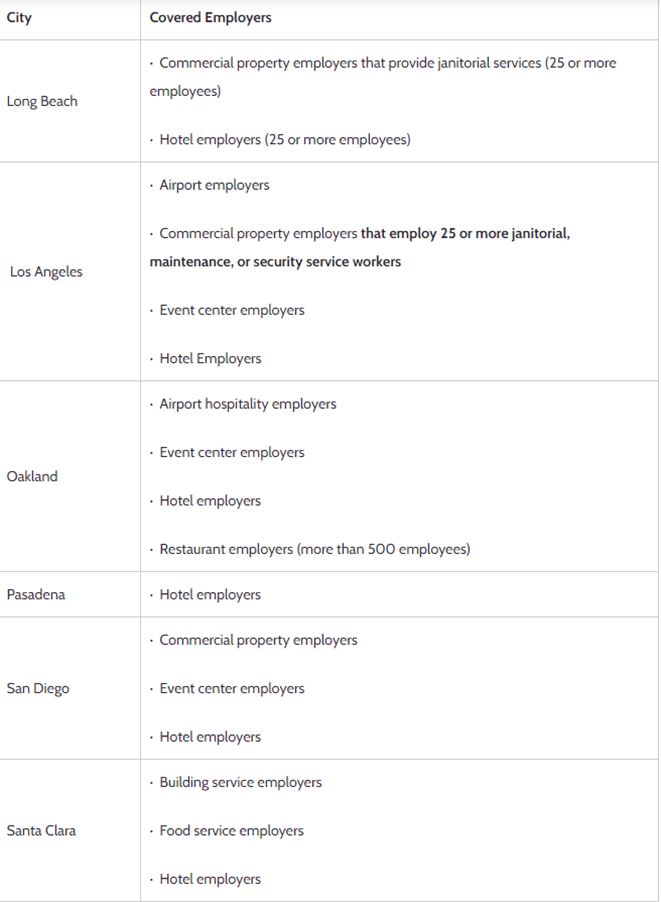
As noted in a previous FrankCrum news alert, the Governor signed SB 93 into law which affects certain employers, most of which are directly or tangentially related to the hospitality industry. California has FAQs available here.
Municipalities have additional requirements as well noted below. Reach out to your FrankAdvice HR Consultant as needed.
Sonoma County Extends and Expands Leave
The Sonoma County Board of Supervisors has extended the emergency paid sick leave (EPSL) ordinance through September 30, 2021, unless the county further extends the ordinance’s duration.
The amended ordinance allows employees to use EPSL if they have an appointment to receive a COVID-19 vaccine or are ill after receiving the vaccine and cannot work or telework.
The county requires employers to provide 80 hours of 2021 EPSL to employees whose normal work schedule is 40 or more hours per week, and a proportionate amount for other employees based on the average number of hours they work, that employees can use from January 1 through September 30, 2021.
If, as of June 8, 2021, an employee has at least 80 hours of accrued paid sick leave benefits or 160 hours of a combination of paid sick leave, vacation, and paid time off, this satisfies the employer’s 2021 Sonoma County EPSL obligations. If by this date an employee has fewer than 80 / 160 hours, employers must provide EPSL to the extent of the deficiency but can credit COVID-19 paid sick leave hours furnished to an employee under California’s 2021 supplemental paid sick law, Cal/OSHA exclusion pay requirements, or the voluntarily provided paid leave under the conditions outlined in ARPA for FFCRA leave.
Marin County Supplemental Paid Sick Leave
The Marin County, California Board of Supervisors has enacted an ordinance that requires employers in the County’s unincorporated areas with 25 or fewer employees to provide supplemental paid sick leave (SPSL) through September 30, 2021 for certain COVID-19 related reasons.
Full-time employees normally scheduled to work 40 or more hours per week are entitled to receive 80 hours of SPSL, whereas other employees receive an amount of SPSL equal to their average number of work hours in a two-week period, which employers must calculate over the prior six months.
SPSL hours are in addition to any paid sick leave that may be available to the employee under California’s Healthy Workplace Healthy Family Act and pre-existing paid time off (vacation, sick and/or PTO) benefits provided to employees before March 16, 2020. Employers cannot require employees to use other benefits they provide before employees can use SPSL. But, if as of June 8, 2021 an employee had at least 80 hours of accrued paid sick leave benefits or at least 160 hours of a combination of paid sick leave, vacation and paid time off benefits, this satisfies the employer’s obligation to provide SPSL; if an employee has fewer than the requisite 80 or 160 hours, an employer must provide SPSL to account for the difference.
Additionally, employers can offset their SPSL obligation by the amount of COVID-19 paid sick leave hours already furnished to an employee under the federal FFCRA or Cal/OSHA regulations, as well as any future substantially similar state or federal COVID-19 paid sick leave legislation.
Learn more here.
Santa Clara County Phasing Out COVID-19 Requirements
Per a recent health officer order, businesses that have performed two “rounds” of ascertainment and keep appropriate records in compliance with the May order to ascertain vaccination status of personnel working in the county, are no longer required to follow up every two weeks with personnel who are not fully vaccinated. Businesses in Santa Clara County that have not completed two rounds must continue complying with the May order’s vaccination ascertainment requirements until they have completed two rounds.
Santa Clara now recommends but does not require that businesses do the following:
- Strongly encourage all personnel to be fully vaccinated as soon as possible and request updated vaccination status information from those who are not already fully vaccinated.
- Consider moving operations and activities outdoors, especially those involving patrons who are unlikely to be vaccinated.
- Prohibit personnel who are not fully vaccinated from engaging in any work-related travel to places with elevated rates of COVID-19, with widespread circulation of variants of concern, or where community vaccination rates are below the Bay Area’s average.
- Require personnel who are not fully vaccinated to obtain regular testing for COVID-19, and any person experiencing COVID-19 symptoms should be tested immediately via a PCR test, regardless of vaccination status.
Los Angeles County Enacts Emergency Paid Vaccine Leave Ordinance
The Los Angeles County Board of Supervisors has enacted an ordinance that, under certain circumstances, requires all private employers to provide paid leave so employees can receive COVID-19 vaccine injections. This paid leave includes time employees spend traveling to and from appointments and time spent recovering from symptoms related to receiving the vaccine that prevents them from working or teleworking. The ordinance takes effect immediately – but is retroactive to January 1, 2021 – and will remain in effect until August 31, 2021.
This vaccine leave is in addition to any job-protected paid leave under California’s paid sick leave (PSL) law and is available only if employees exhaust all available California supplemental paid sick leave (SPSL). The amount of COVID -19 vaccine leave depends on whether an employee is full-time or part-time, and the ordinance requires employers to display a written notice that the LA County Department of Consumer and Business Affairs will create (you can monitor their website). Learn more about the ordinance here.
Santa Clara County Requires Employers to Determine Vaccination Status of Personnel
Santa Clara County has issued the Order of the Health Officer of the County of Santa Clara to Protect the Community from COVID-19. The order requires employers to ascertain the vaccination status of personnel by June 1, 2021; establish mandatory reporting for employees if they test positive for COVID-19; and enforce additional rules for personnel who are not fully vaccinated. Violations of the order have penalties so employers operating within Santa Clara County should take steps to meet requirements.
For further information and requirements, click here to review the FAQs.
March 2021
Supplemental Paid Sick Leave
As shared last week in a client alert, starting March 29, 2021, California employers with more than 25 employees nationally will have to provide their California employees with up to 80 hours of COVID-19 related supplemental paid sick leave (SPSL). This leave would be for employees who are unable to work or telework due to certain reasons related to COVID-19. The new law applies retroactively to January 1, 2021 and will remain in effect until September 30, 2021.
Click here for the required posting. You can review the detailed FAQs here. For paying or adjusting for SPSL, tell your payroll processor how many hours and which rate of pay, and they will help with correct coding and payment.
Hazard Pay
A growing number of cities in California have recently enacted ordinances requiring large grocery and/or drug stores to pay specified workers premium pay for the heightened risk of exposure to and infection by COVID-19. These municipalities include Oakland, Long Beach, Montebello, West Hollywood, San Leandro, Berkeley, Coachella, Irvine, Los Angeles, San Jose and Santa Monica (San Francisco urges but does not mandate hazard pay). Some locations are subject to legal attack, and while the ordinances are temporary and contain sunset provisions, they may be around for longer than expected.
DFEH Guidance on COVID-19 Vaccination
In California, the state Department of Fair Employment and Housing (DFEH) released updated guidance detailing the agency's position on an employer's ability to mandate COVID-19 vaccination for its employees.
The guidance confirms that employers are generally allowed to mandate FDA-approved COVID-19 vaccines as long as the employer provides reasonable accommodations for employees who cannot receive the vaccine because of a disability or a sincerely held religious belief. This position generally mirrors the stance of the federal Equal Employment Opportunity Commission (EEOC), which published guidance surrounding COVID-19 vaccinations in December 2020.
Employers must also ensure that their vaccination policies and practices do not violate laws prohibiting workplace discrimination, harassment and retaliation on the basis of a protected characteristic or protected activity. For example, an employer may not discriminate against or harass an employee because of a disability that interferes with the employee's ability to obtain a COVID-19 vaccine or a request for reasonable accommodations for a religious belief.
California Department of Industrial Relations Reminder
COVID-19
Cal/OSHA has developed tools and resources to assist employers with understanding their obligations required by the COVID-19 Emergency Temporary Standards. The emergency standards webpage https://www.dir.ca.gov/dosh/coronavirus/ETS.html contains FAQs, a model COVID-19 Prevention Program, and information on other tools. Employers can also call Cal/OSHA’s Consultation Services Branch at 1 (800) 963-9424. Failing to establish and implement an effective COVID-19 Prevention Program may result in regulatory enforcement and fines.
Employers should comply with all health directives and guidance concerning safely reopening businesses to reduce risk of exposure and mitigate outbreaks in the workplace. COVID-19 resources for workers’ compensation including FAQs can be found at www.dir.ca.gov/dwc/covid-19/index.html.
Paid Sick Leave
The Healthy Workplaces Healthy Families Act of 2014 requires employers to provide paid sick leave to individuals who work in California for at least 30 days within a year of employment. Paid sick leave accrues at the rate of one hour per every 30 hours worked, paid at the employee’s regular rate of pay. Employees may use accrued paid sick days beginning on the 90th day of employment.
Employers must provide notice to employees of paid sick leave. Click here for a notice. Employers must provide sick leave upon the oral or written request of an employee and workers who have COVID-19 symptoms are eligible for paid sick leave. Click here for FAQs on paid sick leave.
Protection Against Retaliation
California labor laws also protect an employee from workplace retaliation. Employees have the following protections at work:
- It is unlawful for an employer to lay off or terminate an employee for refusing to perform work that both violates occupational safety and health standard or order, and creates a real and apparent hazard placing the employee or their fellow employees in imminent danger.
- It is unlawful for an employer to retaliate against an employee for reporting noncompliance with local, state or federal rules and regulations, including public health orders, for complaining of a violation of the law, or for refusing to participate in an activity that violates such rules.
- It is unlawful for an employer to retaliate against an employee for utilizing paid sick leave
- It is unlawful for an employer to retaliate against a worker for disclosing a positive COVID-19 test or diagnosis or order to quarantine or isolate.
Employers can visit www.dir.ca.gov/covid for additional information or reach out to their FrankCrum contacts as needed.
February 2021
Equal Pay Reporting
As noted previously in FranklyHR, employers with 100 or more employees, who currently file an annual EEO-1 report, are required to submit an annual pay data report to the California Department of Fair Employment and Housing. If an employer has at least one employee in California, they must count their employees both inside and outside of California to determine if they meet the 100-employee threshold. The first report is due by the end of March and will be required on an annual basis. For questions, please reach out to FrankAdvice.
San Francisco Ordinance Protecting Workers from Adverse Action for COVID-19-Related Reasons
San Francisco has adopted a permanent version (i.e., not temporary) of the emergency ordinance. The new version of the ordinance takes effect March 7, 2021, and expires two years after its effective date. Employers must provide a notice regarding employee rights under this permanent ordinance, and the San Francisco Office of Labor Standards Enforcement is tasked with creating a model notice. The temporary ordinance expired on November 20, 2020.
Coachella Hazard Pay
A new Coachella ordinance requires payment of hazard pay of $4.00 per hour to agricultural, restaurant, grocery and retail pharmacy workers. Covered employers are those who employ 300 or more designated workers nationally and employ more than 15 employees per agricultural operation, grocery store, restaurant, or retail pharmacy location in the City of Coachella.
January 2021
COVID-19 Paid Leave
For much of the COVID-19 pandemic, many California employees have utilized leave entitlements provided through federal, state, and local paid leave requirements. Beyond FFCRA and CSPSL, which have expired, almost all California employers must provide exclusion pay to employees excluded from work for certain COVID reasons under Cal/OSHA’s emergency temporary standards.
Guidance to date from Cal/OSHA is that an employer may require an employee to exhaust paid sick leave benefits before giving exclusion pay and may offset that pay by the amount an employee receives in other benefit payments like state disability insurance. Cal/OSHA is anticipated to update its FAQ guidance on exclusion pay; additionally, Cal/OSHA’s authority to require the pay has been challenged in many lawsuits. At this time, employers should continue to provide exclusion pay and document facts and their analysis that an employee’s exposure was not work-related if the decision is to deny exclusion pay.
Several localities implemented their own paid-leave entitlements, many which expired with FFCRA. The following remain in effect:
City of Long Beach – the city ordinance does not have an expiration date. The City Manager is required to report to the City Council the effectiveness of the ordinance. The next report is the beginning of March.
City of Los Angeles – Los Angeles leave will continue to remain in effect until two calendar weeks after the expiration of the COVID-19 local emergency period.
County of Los Angeles – L.A. County has extended supplemental paid leave until two calendar weeks after expiration of COVID-19 emergency declaration.
City of San Jose – the City Council approved an extension of the ordinance to June 30, 2021.
County of San Mateo – the leave ordinance has been extended to June 30, 2021.
City of Sacramento – the leave ordinance has been extended to March 31, 2021.
County of Sacramento - the ordinance has been extended to March 31, 2021.
City of San Francisco – the ordinance has been extended through February 11, 2021.
County of San Francisco – the ordinance has been extended through February 11, 2021.
City of Oakland – emergency paid sick leave will remain in effect until the end of the City’s declared COVID-19 emergency status.
City of Santa Rosa – Santa Rosa has extended leave through March 31, 2021.
December 2020
This year, the California legislature was kept busy passing legislation in response to the coronavirus (COVID-19) pandemic, a recession and wildfires that devastated the state. Legislators also managed to squeeze in some significant employment laws. Paid and unpaid leave, training and workplace safety are just some of the topics included here. Changes to minimum wage rates, at both the state and local level, are coming as well. Read on to learn more.
Leave of Absence
The big news for many employers in the Golden State is the significant expansion of the California Family Rights Act (CFRA), which provides employees with up to 12 weeks of unpaid protected family and medical leave.
Changes to the CFRA include:
- Employers with five or more employees (previously 50 or more) will be required to comply with the CFRA.
- Employees will be allowed to take leave to care for additional family members, including a domestic partner, adult children, the children of a domestic partner, grandparents, grandchildren and siblings.
- Employees will be permitted to take leave for reasons related to a family member's covered active duty in the US Armed Forces.
- Parents who work for the same employer will each be entitled to take 12 weeks of leave for a child's birth or placement (previously the limit was 12 weeks combined).
In light of the CFRA's expanded coverage, the New Parent Leave Act, applicable to employers with 20-49 employees, will be repealed effective January 1, 2021.
Other leave-related protections include the expanded protection for an employee who is the victim of a crime or domestic abuse and employees will be allowed to use paid family leave insurance benefits for reasons related to the covered active duty of a family member who is in the US Armed Forces.
Minimum Wage
Given that so many cities and counties across the state have implemented local minimum wage laws, employers must stay current on any increases that may apply to them. This January, a total of 25 localities - including Oakland, San Diego and San Jose - will roll out increases to their minimum wages. And employers in Burlingame, Half Moon Bay, Hayward and San Carlos should be aware of first-time minimum wage laws taking effect and be ready to comply with related posting and recordkeeping requirements.
In addition, the state minimum wage will increase to $14.00 for employers with 26 or more employees and to $13.00 for employers with 25 or fewer employees. Click here for further information.
Please also review the State Exempt Employee Minimum Salary article in this FranklyHR newsletter for California changes.
Training
In 2020, California employers with five or more employees are required to provide sexual harassment prevention training to both employees and supervisors.
Beginning January 1, 2021, temporary and seasonal workers will be required to receive the training within 30 days of hire or within 100 hours worked, whichever occurs first.
Other new training obligations will apply to specific employers. Certain transportation employers will be required to provide human trafficking awareness training to specified employees. Acute care hospitals will be required to reimburse certain training expenses of employees and job applicants. Under the Child Abuse and Neglect Reporting Act, as of January 1, 2021, employers of mandated reporters must provide training on the identification and reporting of child abuse and neglect. See more details at the end of this article.
Workplace Safety
Not surprisingly, some of the new laws concern workplace safety. Cal/OSHA has modified regulations pertaining to COVID-19. Employers who receive a notice of potential exposure to COVID-19 will be required to take quick action (within one business day) to notify employees and share information concerning COVID-19-related benefits and workplace disinfection and safety plans. Read more about California AB 685 taking effect January 1, 2021 here.
Equal Pay Reporting
A recent development in California: employers with 100 or more employees, who currently file an annual EEO-1 report, will be required, as of January 1, 2021, to submit an annual pay data report to the California Department of Fair Employment and Housing. The first report is due by March 31, 2021. Additional information will be coming from FrankCrum in the coming weeks.
Other Developments
Child Abuse and Neglect Reporting Act requires a mandated reporter to report whenever they, in their professional capacity or within the scope of their employment, have knowledge of or observed a child whom the mandated reporter knows or reasonably suspects has been the victim of child abuse or neglect.
Effective January 1, 2021, the following employees are added to the list of mandated reporters:
- A human resource employee of an employer with five or more employees that employs minors; and
- An adult whose duties require direct contact with and supervision of minors in the performance of the minors' duties in the workplace of a business with five or more employees.
Employers of mandated reporters must provide training on the identification and reporting of child abuse and neglect. The training requirement may be met by completing the general online training for mandated reporters offered by the Office of Child Abuse Prevention in the State Department of Social Services.
AB 3075 will require corporations to register with the state information regarding violations of the wage orders or Labor Code effective January 1, 2021.
AB 1947 lengthens from six months to one year the statute of limitations for bringing a claim of discharge of discrimination in violation of any law under the jurisdiction of the Labor Commissioner, effective January 1, 2021.
AB 979 will required corporations with principal executive offices in CA to appoint minority directors (underrepresented communities) to their board of directors. The law was recently amended to include LGBTQ. This new requirement will require at least one director on the board of an “underrepresented community” by the close of 2021.
For workplace safety questions reach out to safetyandrisk@frankcrum.com.
For HR questions reach out to your FrankAdvice HR Consultant directly or email frankadvice@frankcrum.com.
November 2020
California Protect App-Based Drivers and Services Act Takes Effect
Projected to take effect December 16, 2020, the ballot initiative Proposition 22 - also known as the "Protect App-Based Drivers and Services Act" - amends the state code to establish that app-based drivers are independent contractors, not employees, as long as certain requirements are met.
In addition, a party that hires an app-based driver - a Transportation Network Company (TNC) (a rideshare company like Uber or Lyft, as defined in +Cal Pub Util Code § 5431(c)) or a Delivery Network Company (DNC) (a delivery company like Doordash, as defined under the amended code) - is required to:
- Guarantee earnings of at least 120% of the state or local minimum wage for each hour a driver spends driving and at least $0.30 for each mile driven (adjusted for inflation every year);
- Provide healthcare subsidies, up to the average Affordable Care Act (ACA) employer contribution for the applicable average monthly covered California premiums;
- Provide occupational accident insurance and accidental death insurance;
- Develop a sexual harassment policy that meets state standards;
- Require drivers to complete safety training;
- Conduct criminal background checks on drivers;
- Institute a zero-tolerance policy for the suspension of drivers suspected to be under the influence of drugs or alcohol;
- Refrain from discriminatory conduct; and
- Make sure drivers log off the app for at least six hours after they have been on for 12 cumulative hours in any 24-hour period.
California Expands Paid Family Leave to Include Qualifying Military Exigencies
Effective January 1, 2021, an employee may claim paid family leave insurance benefits if he or she is unable to work due to participation in a qualifying exigency related to the covered active duty or call to covered active duty of the employee's spouse, domestic partner, child or parent who is in the US Armed Forces.
California Kin Care Leave Law Amended
Effective January 1, 2021, California’s Kin Care leave law is amended to provide that designation of sick leave under the law is at the sole discretion of the employee.
Governor Newsom Signs Several Bills This Month
AB 1867 ensures access to paid sick leave for every California employee, closing gaps in federal and state law. AB1867 requires private employers with 500 or more employees nationwide (as well as certain healthcare providers and emergency responders) to provide up to 80 hours of COVID-19 related paid sick leave. This is effective until the latter of December 31, 2020 or the expiration of any extension of the federal Families First Coronavirus Response Act (FFCRA).
AB 2257 is intended to clarify and expand the ABC test, which governs independent contractor classification under California’s wage and hour, workers’ compensation, unemployment insurance and labor laws. AB2257 creates new exemptions for professionals in the music and performing arts industries; data aggregators; individuals providing underwriting inspections, premium audits, risk management or loss control work for the insurance and financial services industries; individuals providing appraisal services; and others. It also repeals a requirement that the ABC test applies to freelance writers, still photographers, photojournalists and editors after they have provided more than 35 content submissions to a single hiring entity. The bill also expands several types of business-contracting relationships that are governed by the more employer-friendly Borello test.
SB 1159 expands access to workers’ compensation and makes it easier for first responders, health care workers and people who test positive due to an outbreak at work to get the support they need, including necessary medical care and wage replacement benefits. SB 1159 requires employers to report such situations to their workers’ compensation claims administrator.
AB 685 ensures timely notification to employees and local and state public health officials of COVID-19 cases at workplaces. This notification will help workers take necessary precautions such as seeking testing, getting medical help or complying with quarantine directives. This bill strengthens Cal/OSHA’s enforcement authority by providing clear authority to close a worksite due to a COVID-19 hazard and reducing the timeframe for COVID-19 citations. This legislation takes effect on January 1, 2021.
SB 1383 expands the California Family Rights Act (CFRA). The CFRA currently applies to employers with 50 or more employees and requires covered employers to provide up to 12 weeks of unpaid leave during each 12 month-period for purposes of family and medical leave. It provides covered employees with job-protected, unpaid time off for several reasons, including for their own illness or a sick relative. SB 1383 expands the scope of “family members” for whom employees can take leave and expands CFRA to now apply to private employers with five or more employees. This legislation will take effect on January 1, 2021.
July 2020
COVID-19 Employer Playbook
Governor Newsom has released a 32-page playbook providing additional guidance for California employers related to COVID-19 and safe re-opening.
For assistance with California laws please reach out to your FrankCrum contact.
Oakland Hotel Worker Safety Protections
In November 2018, Oakland voters approved Ballot Measure Z, which establishes workplace safety protections for hotel employees working at a hotel with 50 or more guest rooms.
By July 1, 2020 hotel employers must provide their employees with the following protections:
- Employer-provided emergency contact devices (panic buttons);
- Rights to report violent/threatening behavior; and
- Restrictions on the maximum space to be cleaned
Click here for FAQs on requirements for employers.